

A heat-pump project is a sequence of design, coordination, installation, and verification steps. The quality of the final result depends on decisions made before installation day as much as the workmanship performed that day. This heat pump installation Puyallup guide follows the process from the first estimate through final testing so homeowners know what questions to ask and what deliverables to expect. Cool Fox Heating & Air specializes in heat pump installation and can complete required electrical upgrades through its in-house team.
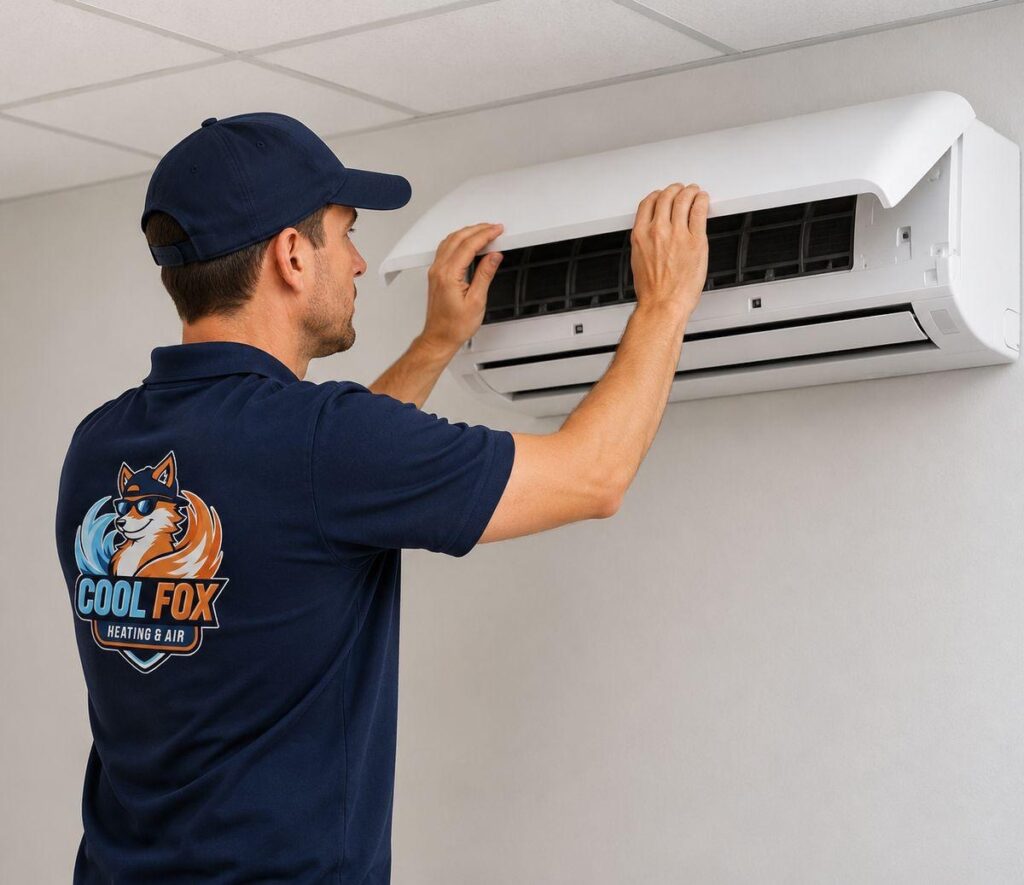
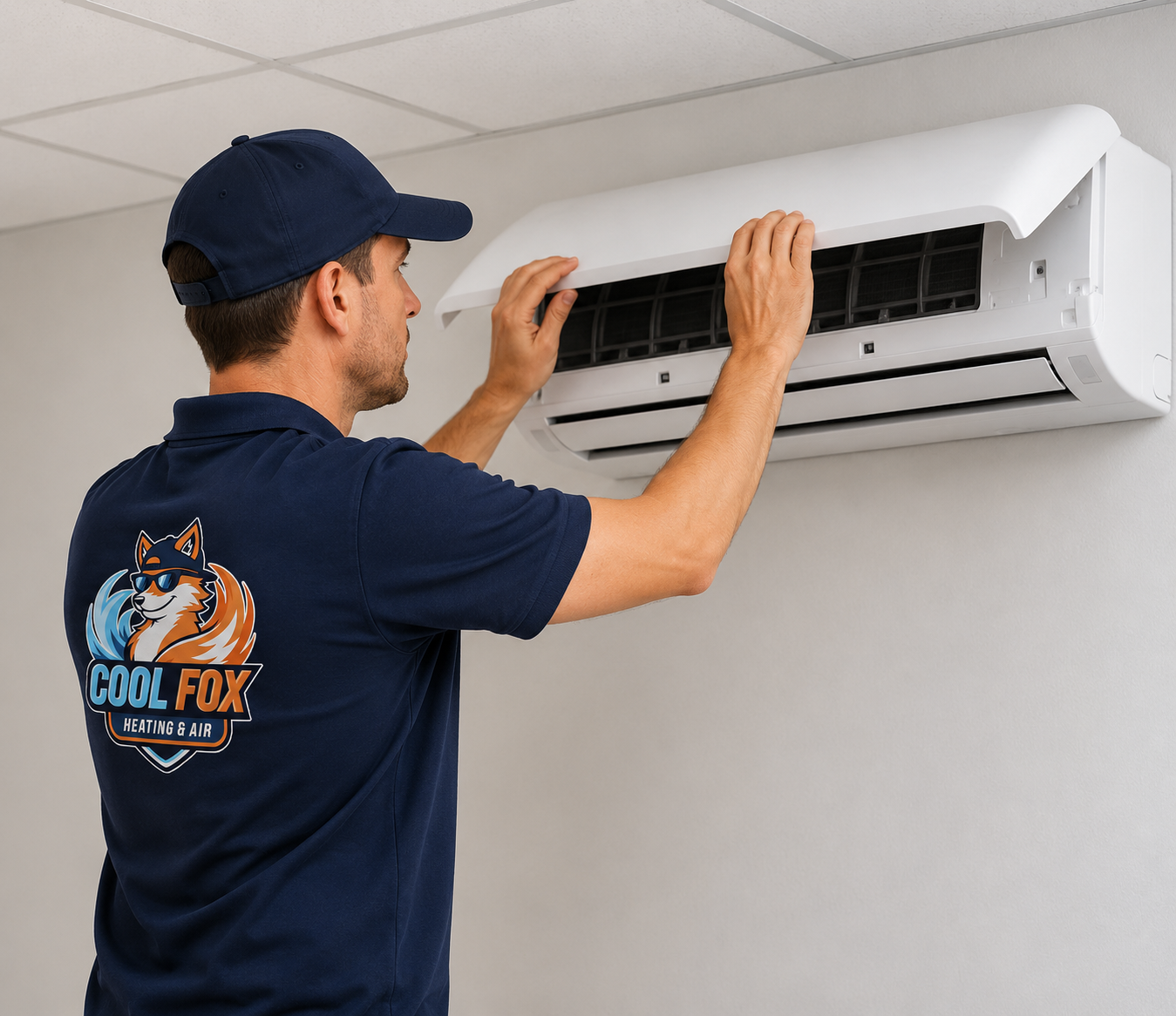
Cool Fox technician working on a residential ductless heat-pump installation. | Image source: Cool Fox Heating & Air website
Heat Pump Installation Puyallup: Step 1 Is the Home Assessment
The first visit should identify why the homeowner is considering a heat pump. Common goals include replacing an old furnace and air conditioner, adding cooling, reducing uneven temperatures, serving an addition, modernizing controls, or moving toward electric heating. The contractor should ask which rooms are uncomfortable, when the problem occurs, and how the existing system has performed.
The assessment should document existing equipment, ducts, filters, returns, electrical panel, thermostat, fuel, venting, drainage, outdoor locations, attic or crawlspace access, and visible building characteristics. For ductless work, indoor-unit placement, wall construction, condensate routes, and line-set appearance are important. Measurements and photographs support accurate proposal development.
A useful starting point is a whole-home conversation rather than a product-only quote. Cool Fox Heating & Air provides heat pump installation services and can also coordinate electrical upgrade services when the project requires both trades. That integrated approach matters because comfort, airflow, controls, electrical capacity, and installation quality all influence the final result.
Step 2: Calculate Loads and Select the System Type
Heating and cooling load calculations estimate the capacity required under local design conditions. They should account for windows, insulation, air leakage, orientation, ceiling height, occupancy, and home improvements. The result guides equipment selection and helps prevent short cycling or inadequate capacity.
The contractor then compares central ducted, ductless, multi-zone, or dual-fuel configurations. Existing ducts may be retained, modified, or replaced depending on airflow and condition. A difficult bonus room may need its own zone. The proposal should explain why the selected design fits the floor plan rather than presenting equipment as interchangeable boxes.
For homeowners researching heat pump installation Puyallup, the practical lesson is that equipment specifications are only one part of the decision. The selected system must be compatible with the home, installed to manufacturer requirements, commissioned under real operating conditions, and explained clearly enough that the homeowner knows how to use it efficiently.
Step 3: Build a Complete Written Proposal
A useful proposal allows the homeowner to compare scope, not merely price. It should identify:
- Exact indoor and outdoor equipment model numbers, capacity, efficiency, controls, and warranty.
- Duct modifications, indoor-unit locations, line-set and condensate routes, equipment pads, and penetrations.
- Electrical circuits, disconnects, panel or service work, surge protection, and auxiliary-heat requirements.
- Permit, inspection, utility, rebate, and incentive responsibilities when applicable.
- Removal of old equipment, refrigerant handling, cleanup, finish protection, and restoration exclusions.
- Startup, commissioning measurements, thermostat setup, homeowner training, and maintenance recommendations.
Step 4: Confirm Electrical Capacity and Project Coordination
The electrical review should use the selected equipment data. The electrician evaluates available capacity, panel condition, breaker spaces, conductor routes, disconnects, grounding, and the requirements of the outdoor unit, indoor unit, and auxiliary heat. A full panel upgrade is not automatic, but the answer should be confirmed before equipment arrives.
If service or panel work is needed, permits, inspections, and utility coordination can affect timing. A coordinated schedule keeps existing heat available as long as practical and reduces downtime. Cool Fox’s in-house HVAC and electrical model is designed to reduce handoffs between contractors, but the written proposal should still explain the sequence.
A professional evaluation should leave the homeowner with clear choices rather than a vague recommendation. Each option should identify what is being replaced or retained, what supporting work is included, how comfort or reliability is expected to improve, and what assumptions could change the scope. Written clarity is especially important when multiple pieces of equipment, electrical changes, duct modifications, condensate routing, controls, or permits may be involved.
Step 5: Address Puyallup Permits, Site Conditions, and Equipment Locations
Mechanical and electrical work may require permits depending on the scope. Homeowners should confirm who applies, pays, schedules inspections, and closes the permit. Requirements and incentive programs can change, so current information should be verified for the specific address and project before publication or installation.
Outdoor-unit placement should account for airflow, service clearance, roof runoff, vegetation, drainage, sound, snow or debris, property use, and line-set length. The pad or stand should provide stable support. The indoor equipment needs filter access, condensate protection, and room for future service.
Puyallup homes near trees or landscaped lots may expose outdoor coils to needles, leaves, pollen, and clippings. The installation should preserve clearance and make maintenance practical. A hidden unit that cannot breathe or be serviced is not a successful design.
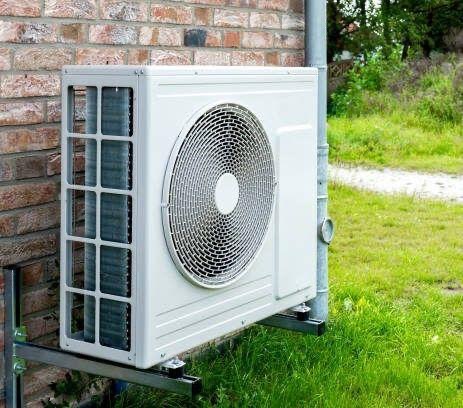
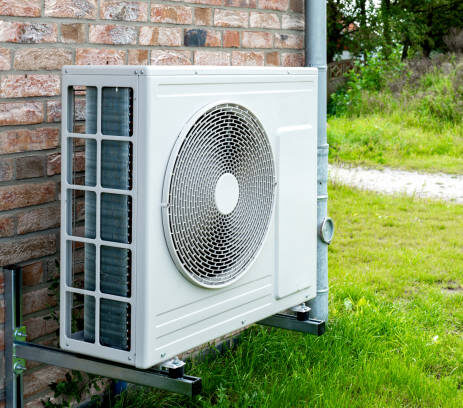
Outdoor air-source heat pump installed for year-round home comfort. | Image source: Cool Fox Heating & Air website
Step 6: Install With Attention to Airflow, Refrigerant, and Drainage
Installation includes setting equipment, connecting or modifying ducts, routing refrigerant lines, making electrical connections, installing controls, and providing condensate drainage. Refrigerant piping should follow manufacturer limits and practices. Duct transitions should be sealed and shaped to support airflow. Penetrations should be weather-sealed and finished neatly.
Ductless indoor units should be placed where they can distribute air effectively and remain accessible. Condensate must flow reliably or be pumped through an appropriate system. Line-set covers and exterior routes should be discussed before installation so the finished appearance matches expectations.
Efficiency should be discussed as part of a complete operating system. Oversized equipment, restricted ducts, poor refrigerant setup, incorrect airflow, dirty filters, or controls that are not configured correctly can prevent high-efficiency equipment from delivering its rated potential. A balanced recommendation considers purchase price, expected use, comfort priorities, maintenance requirements, warranty terms, and the likely condition of the rest of the home.
Step 7: Understand Payment, Incentives, and Change Conditions
The total price reflects equipment, labor, electrical work, ducts, permits, access, removal, commissioning, and warranty. Homeowners should understand deposit and payment milestones, financing terms, incentive assumptions, and expiration dates. A rebate should not be treated as guaranteed until current eligibility and documentation requirements are confirmed.
The proposal should identify possible hidden conditions, such as damaged ducts, inaccessible wiring routes, structural obstacles, or service upgrades that cannot be fully confirmed before work begins. A professional contractor explains how changes will be documented and approved rather than presenting surprise costs after installation.
The lowest initial price is not always the lowest long-term cost. A more complete comparison includes energy use, maintenance access, repair risk, warranty coverage, expected service life, comfort consistency, noise, and the possibility of future electrical or ductwork work. Homeowners should ask what is included in commissioning and how the contractor will document that the system is operating as designed.
Step 8: Avoid Common Installation-Process Mistakes
The project is more likely to succeed when homeowners avoid these shortcuts:
- Accepting equipment selection without a load and distribution assessment.
- Choosing indoor or outdoor locations without discussing sound, airflow, drainage, appearance, and service access.
- Waiting until installation day to evaluate electrical capacity and permit timing.
- Comparing proposals with different model numbers and incomplete supporting scope.
- Assuming startup is complete because the unit turns on.
- Leaving the appointment without understanding thermostat operation, filters, defrost behavior, backup heat, warranties, and maintenance.
Step 9: Final Testing and Commissioning Checklist
Before the project is considered complete, the team should verify and document appropriate items such as:
- Equipment model match, secure installation, clearances, panels, disconnects, and labeling.
- Airflow or static-pressure settings for ducted systems and indoor-unit operation for ductless systems.
- Refrigerant-system setup under suitable conditions and compliance with manufacturer procedures.
- Condensate drainage, pumps, pans, overflow protection, and defrost-water path.
- Thermostat communication, heating, cooling, staging, auxiliary heat, and safety operation.
- Filter access, homeowner training, maintenance plan, permits, warranty registration, and project documentation.
What Homeowner Training Should Cover
Heat pumps can feel different from furnaces. They may deliver lower-temperature air for longer periods, modulate quietly, and enter defrost cycles during cool damp weather. Large thermostat setbacks can trigger supplemental heat depending on the configuration. The installer should explain these behaviors so normal operation is not mistaken for a malfunction.
The homeowner should know how to change or clean filters, keep outdoor clearances open, use thermostat schedules, identify auxiliary heat, respond to alerts, and request service. Warranty documentation, equipment model numbers, permits, and maintenance recommendations should be easy to locate after the crew leaves.
Cool Fox describes its process as straightforward: schedule a consultation, review clear options, and complete the work with clean professional installation. Homeowners can request a free estimate to discuss the home, current equipment, comfort concerns, and project goals before deciding whether heat pump installation Puyallup is the right next step.
Frequently Asked Questions
How long does heat pump installation take in Puyallup?
Many straightforward residential installations can be completed in one or several days. Electrical service work, ducts, multiple zones, access, permits, or utility coordination can extend the schedule.
Will I need an electrical panel upgrade?
Not every home does. The selected equipment, auxiliary heat, existing loads, panel condition, and breaker space must be assessed by a qualified professional.
Can a heat pump use my existing ducts?
Often yes when the ducts are correctly sized, reasonably tight, and in suitable condition. Airflow and return paths should be evaluated before reuse.
What happens to my old furnace or air conditioner?
The proposal should state what equipment will be removed, retained, recycled, or used as backup. Refrigerant and fuel connections must be handled appropriately.
Why is commissioning important?
Commissioning verifies that the installed equipment, airflow, refrigerant system, electrical supply, controls, drainage, and backup heat operate as intended. It turns an installation into a proven system.
Talk With a Local HVAC and Electrical Team
Knowing the installation sequence makes it easier to compare proposals and recognize a complete project. Cool Fox Heating & Air can manage home assessment, equipment selection, HVAC work, electrical coordination, startup, and training for Puyallup homeowners. Review heat pump installation services or schedule a free estimate.
External Sources
- U.S. Department of Energy – Heat Pumps
- ENERGY STAR – HVAC Quality Installation
- City of Puyallup – Building Permit Applications
Editorial note: External sources are provided for reader education. Availability of incentives, permits, equipment, and utility programs can change; verify current requirements before publication.