

Outdoor HVAC equipment is designed to operate in weather, but a damp marine-influenced environment can increase exposure to moisture, organic debris, and airborne salts. Corrosion risk depends on distance from saltwater, prevailing wind, shelter, landscaping, equipment materials, and maintenance. This HVAC maintenance Gig Harbor guide explains practical ways to protect heat pumps and air conditioners without using harsh cleaning methods that can damage coatings or components. Cool Fox Heating & Air provides HVAC maintenance and tune-up services and heat pump installation for homeowners throughout the South Sound.
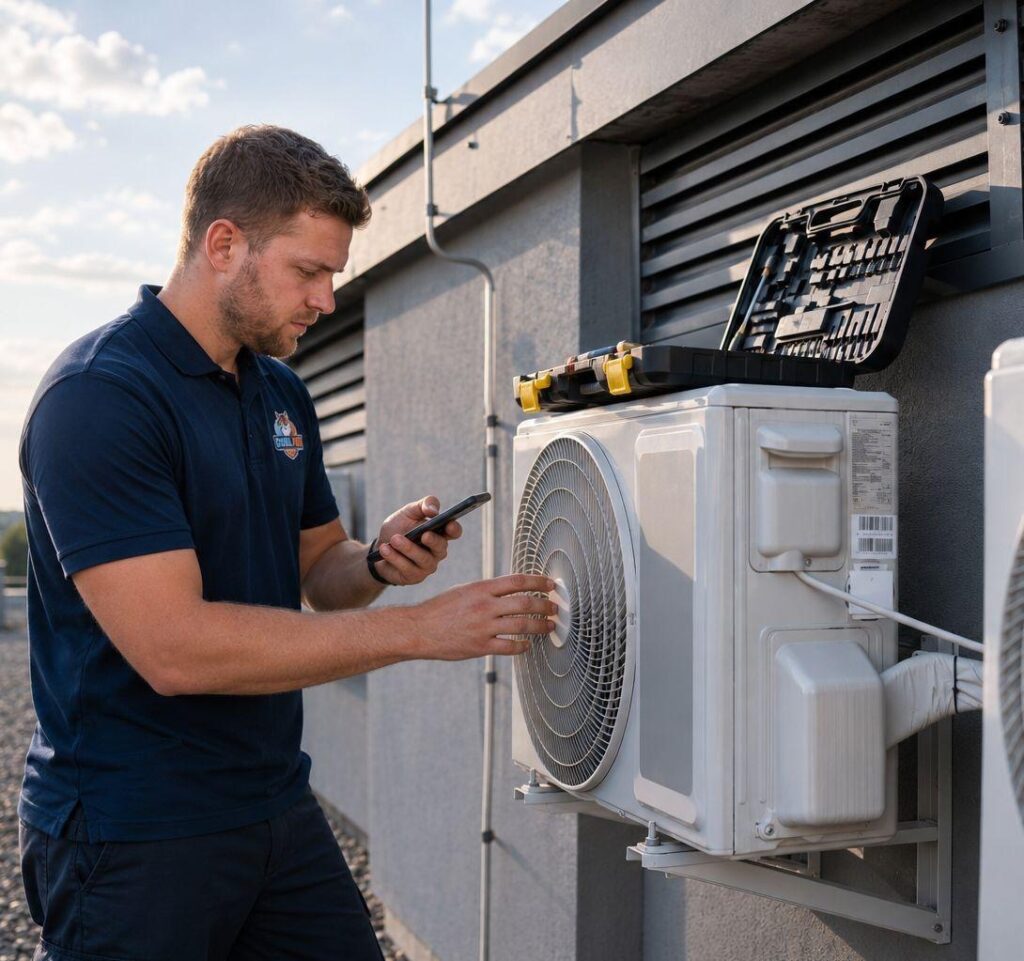
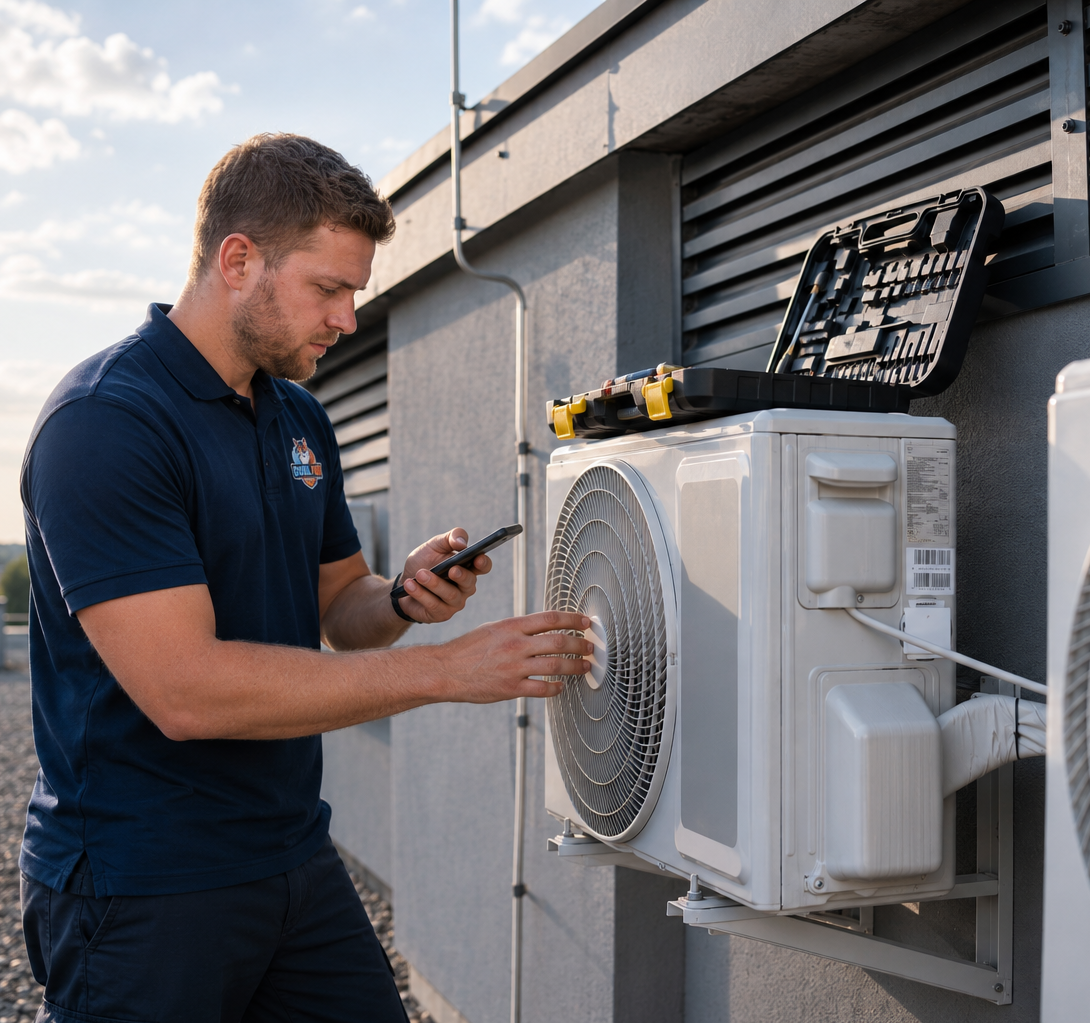
Cool Fox technician inspecting outdoor HVAC equipment. | Image source: Cool Fox Heating & Air website
HVAC Maintenance Gig Harbor: Understand the Exposure Around Your Home
Not every Gig Harbor property has the same coastal exposure. A sheltered inland neighborhood may experience mostly rain, shade, moss, and tree debris. A home closer to marine air or exposed wind may encounter more salt-influenced moisture. The contractor should look at actual site conditions rather than applying one severe-environment assumption to the entire area.
Outdoor units contain coils, fins, fasteners, cabinets, electrical connections, fan motors, and refrigerant components. Protective coatings and materials vary by manufacturer and model. Maintenance should follow the equipment instructions, particularly when deciding whether and how to rinse or clean a coil.
A useful starting point is a whole-home conversation rather than a product-only quote. Cool Fox Heating & Air provides HVAC maintenance and tune-up services and can also coordinate heat pump installation services when the project requires both trades. That integrated approach matters because comfort, airflow, controls, electrical capacity, and installation quality all influence the final result.
How Moisture, Salt, and Debris Affect Outdoor Equipment
Moisture can keep contaminants in contact with metal surfaces and encourage corrosion where coatings are damaged. Salt can increase conductivity and accelerate deterioration. Leaves, needles, pollen, moss, and clippings can block airflow, hold moisture, and collect at the base of the cabinet. Roof runoff can repeatedly wash concentrated debris onto one area.
Corrosion is not only cosmetic when it affects coil fins, tubing, electrical terminals, fasteners, supports, or cabinet integrity. Restricted coils reduce heat transfer and can increase operating pressure and runtime. Damaged electrical connections may create faults or overheating. Early inspection allows the owner to discuss cleaning, repair, coating compatibility, or replacement planning before failure.
For homeowners researching HVAC maintenance Gig Harbor, the practical lesson is that equipment specifications are only one part of the decision. The selected system must be compatible with the home, installed to manufacturer requirements, commissioned under real operating conditions, and explained clearly enough that the homeowner knows how to use it efficiently.
What Homeowners Can Safely Check Between Service Visits
Regular observation helps identify changes without opening the equipment:
- Keep shrubs, vines, storage, fencing, and debris outside the manufacturer-required airflow and service clearances.
- Remove loose leaves and clippings around the unit without bending coil fins or pushing material deeper into the cabinet.
- Watch where gutters, downspouts, sprinklers, deck runoff, and defrost water discharge.
- Look for flaking coating, rust streaks, green or white residue, damaged line insulation, loose panels, or shifting supports.
- Listen for new rattling, fan contact, buzzing, or cycling changes and note when they occur.
- Check after windstorms for branches, covers, or objects that may have moved against the outdoor unit.
What Professional Coastal HVAC Maintenance Should Include
The technician should inspect the outdoor coil and cabinet, fasteners, base, fan, electrical compartment, disconnect, visible refrigerant piping, insulation, service clearances, drainage, and equipment support. Cleaning should match the manufacturer instructions and degree of contamination. Aggressive chemicals, pressure, or tools can damage fins and protective surfaces.
The indoor system still matters. Airflow, filters, blower components, indoor coils, thermostat operation, condensate drains, and electrical performance influence outdoor-unit operation. A coastal inspection is not a substitute for a complete tune-up. The technician should document areas of corrosion and distinguish surface appearance from conditions that affect safety or performance.
A professional evaluation should leave the homeowner with clear choices rather than a vague recommendation. Each option should identify what is being replaced or retained, what supporting work is included, how comfort or reliability is expected to improve, and what assumptions could change the scope. Written clarity is especially important when multiple pieces of equipment, electrical changes, duct modifications, condensate routing, controls, or permits may be involved.
Placement and Drainage Are Long-Term Maintenance Decisions
An outdoor unit placed under roof runoff, tight against vegetation, beside an irrigation head, or in a confined deck enclosure will be harder to protect. Replacement or new installation is an opportunity to select a location with better airflow, access, drainage, and separation from predictable contaminants while meeting applicable requirements.
Heat pumps produce defrost water during heating operation. The site should allow that water to leave without pooling around the base, saturating soil, flowing toward the foundation, or creating a walkway hazard. Stands or pads may be appropriate depending on equipment and site, but they must provide stable support.
Landscaping plans should preserve service access over the life of the equipment. A small shrub can become a dense barrier within a few seasons. Homeowners should also avoid decorative screens that trap recirculated air or make electrical and refrigerant components inaccessible.
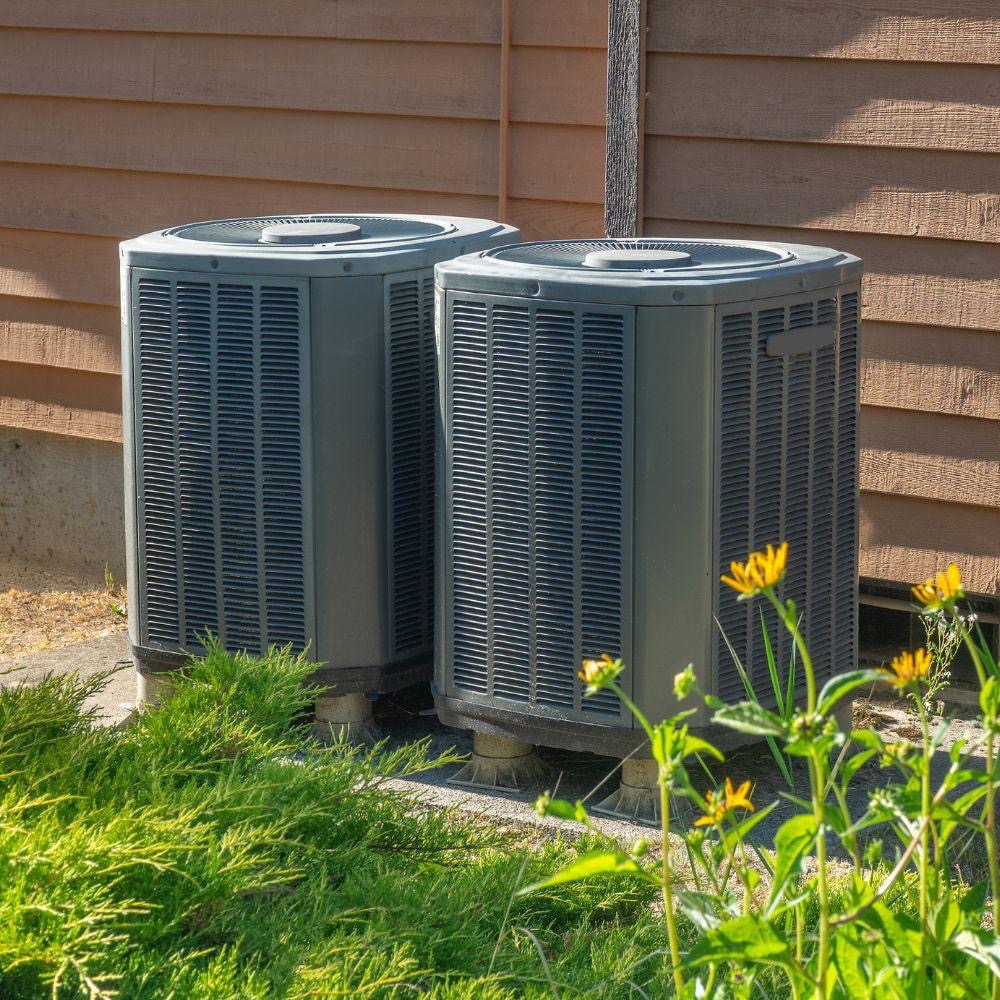
Outdoor HVAC systems installed with access for airflow and service. | Image source: Cool Fox Heating & Air website

Clean, Unobstructed Coils Support Heat Transfer
The outdoor coil must exchange heat with the air. Debris and contamination reduce effective surface area and can force the system to operate longer or at less favorable conditions. Heat pumps rely on that coil during both heating and cooling, so outdoor maintenance matters throughout the year.
Cleaning should be proportional and appropriate. More pressure is not better, and household chemicals may attack aluminum, copper, coatings, seals, or nearby materials. Follow manufacturer guidance and use a qualified technician when the coil needs more than gentle removal of loose surface debris.
Efficiency should be discussed as part of a complete operating system. Oversized equipment, restricted ducts, poor refrigerant setup, incorrect airflow, dirty filters, or controls that are not configured correctly can prevent high-efficiency equipment from delivering its rated potential. A balanced recommendation considers purchase price, expected use, comfort priorities, maintenance requirements, warranty terms, and the likely condition of the rest of the home.
Corrosion Prevention Is Usually Less Expensive Than Component Damage
Routine inspection can identify loose panels, damaged insulation, blocked drainage, minor coating damage, and vegetation before they contribute to larger problems. Once a coil, electrical assembly, fan support, or refrigerant component is significantly deteriorated, repair may be costly or impractical. Maintenance helps with planning even when deterioration cannot be reversed.
Homeowners comparing new equipment can ask about manufacturer coastal recommendations, available protective features, warranty exclusions, placement, and maintenance instructions. A premium coating is not permission to ignore the environment. Documentation and appropriate service remain important.
The lowest initial price is not always the lowest long-term cost. A more complete comparison includes energy use, maintenance access, repair risk, warranty coverage, expected service life, comfort consistency, noise, and the possibility of future electrical or ductwork work. Homeowners should ask what is included in commissioning and how the contractor will document that the system is operating as designed.
Coastal HVAC Maintenance Mistakes to Avoid
Avoid methods that can create more damage than they prevent:
- Using a pressure washer on delicate coil fins or electrical areas.
- Applying bleach, household cleaners, or unapproved chemicals to coils and cabinets.
- Wrapping a heat pump during heating season or using a cover that blocks airflow and traps moisture.
- Allowing shrubs, deck skirting, or decorative screens to close in around the unit.
- Ignoring roof runoff, sprinklers, soil settlement, or persistent water around the base.
- Treating corrosion as purely cosmetic without inspecting electrical, structural, and refrigerant components.
A Gig Harbor Seasonal Maintenance Plan
A practical plan combines homeowner observation with equipment-specific professional service:
- Inspect the area around the outdoor unit after storms and during periods of heavy leaf or needle drop.
- Check filters on a schedule appropriate to the system, household, pets, smoke, and manufacturer guidance.
- Schedule professional service before peak heating or cooling demand and mention marine or salt exposure.
- Photograph developing corrosion so changes can be compared over time.
- Ask the technician which cleaning method and interval the manufacturer recommends for the installed model.
- Plan landscaping, gutter, and drainage work so it protects equipment clearances and service access.
When Repair, Relocation, or Replacement Should Be Discussed
Surface corrosion may be monitored, cleaned, or protected when the manufacturer permits. More serious deterioration involving coil tubing, electrical terminals, supports, cabinet integrity, or repeated refrigerant loss may justify repair or replacement discussion. The recommendation should identify the affected component and operational risk.
Relocation may be considered when the environment repeatedly exposes equipment to runoff, irrigation, recirculated air, impact, or inaccessible landscaping. Moving equipment has refrigerant, electrical, drainage, permit, and cost implications, so it should be evaluated as a complete project rather than a cosmetic change.
Cool Fox describes its process as straightforward: schedule a consultation, review clear options, and complete the work with clean professional installation. Homeowners can request a free estimate to discuss the home, current equipment, comfort concerns, and project goals before deciding whether HVAC maintenance Gig Harbor is the right next step.
Frequently Asked Questions
How often should coastal HVAC equipment be cleaned?
Frequency depends on manufacturer guidance and site exposure. Homes with salt-influenced air, trees, pollen, or runoff may need more frequent inspection. Cleaning methods should be equipment-appropriate.
Can I rinse my outdoor heat-pump coil with a hose?
Some manufacturers permit gentle rinsing under specific conditions, but instructions vary. Shutoff, direction, water pressure, and electrical protection matter. Consult the manual or a qualified technician.
Is rust on the cabinet an emergency?
Not always, but it should be evaluated. Surface rust differs from corrosion affecting coil tubing, electrical connections, supports, or structural integrity.
Should I cover my heat pump in winter?
A heat pump needs airflow during heating. Covers can block operation and trap moisture. Do not cover operating equipment unless the manufacturer specifically provides an approved approach.
Can a coastal coating prevent all corrosion?
No coating eliminates maintenance or exposure risk. Protective materials can help, but placement, drainage, cleaning, inspection, and manufacturer instructions remain important.
Talk With a Local HVAC and Electrical Team
Outdoor equipment lasts longer when the installation site and maintenance plan reflect the property’s real exposure. Cool Fox Heating & Air can inspect coils, electrical components, drainage, airflow, and equipment condition for Gig Harbor homeowners. Review HVAC maintenance services or request an onsite appointment.
External Sources
- Carrier – Coastal Heating and Air Considerations
- Daikin – Outdoor Unit Installation Manual and Coastal Guidance
- ENERGY STAR – Heating and Cooling Maintenance Checklist
Editorial note: External sources are provided for reader education. Availability of incentives, permits, equipment, and utility programs can change; verify current requirements before publication.