

The phrase “HVAC tune-up” can describe anything from a quick visual visit to a detailed operating inspection. Homeowners deserve to know what is included and how the findings relate to safety, reliability, comfort, and efficiency. This HVAC maintenance Federal Way guide explains the major elements of a professional visit while recognizing that a furnace, heat pump, air conditioner, and dual-fuel system require different procedures. Cool Fox Heating & Air provides HVAC maintenance and tune-up services and can discuss system replacement when inspection shows that repairs are no longer the most practical path.
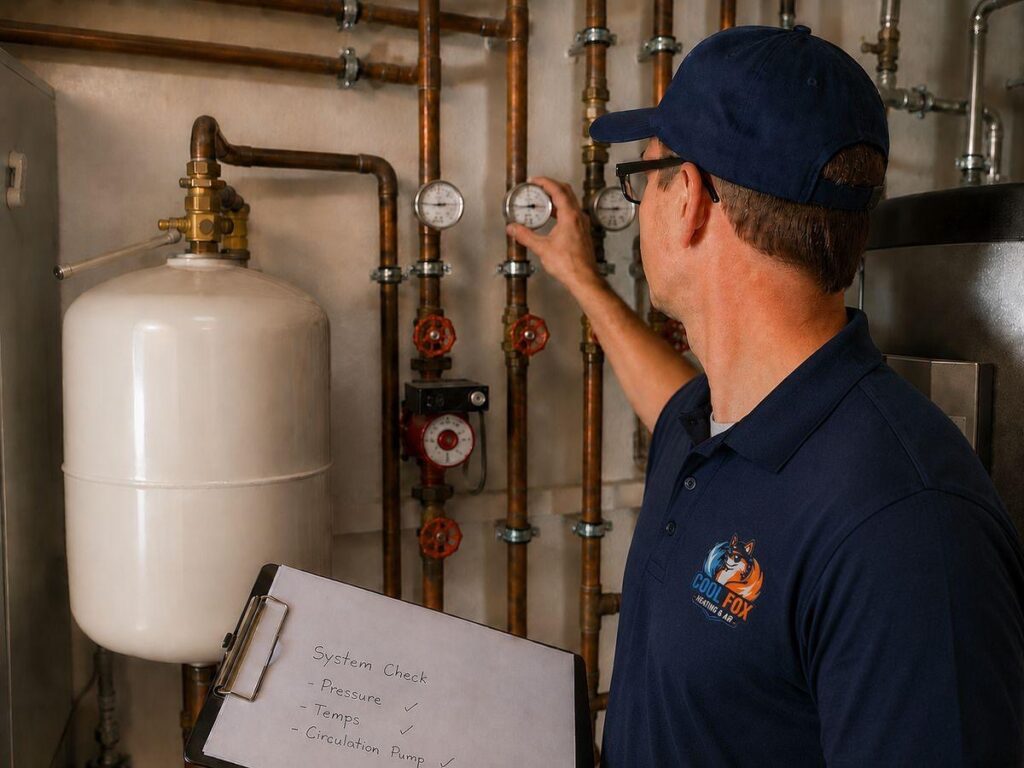
Cool Fox technician performing a residential HVAC tune-up. | Image source: Cool Fox Heating & Air website
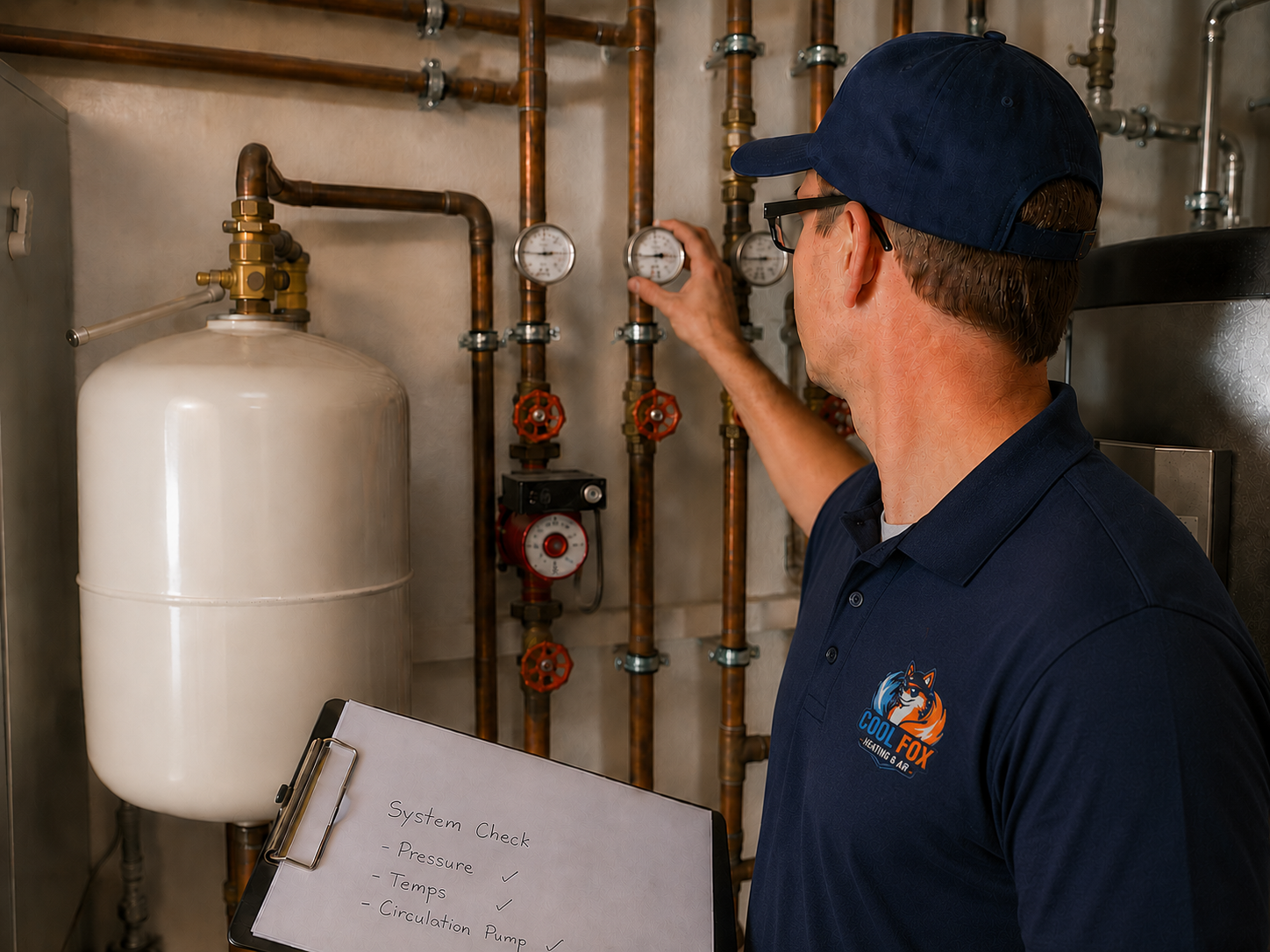
HVAC Maintenance Federal Way: The Tune-Up Should Match the Equipment
A gas furnace needs combustion, ignition, venting, heat-exchanger, blower, filter, electrical, and safety attention. A heat pump adds refrigerant-system operation, outdoor coil condition, defrost controls, reversing operation, drainage, and possible auxiliary heat. An air conditioner requires cooling-specific airflow, refrigerant, electrical, condensate, and outdoor-unit evaluation.
A standardized checklist is useful, but it should not replace professional judgment. The technician must respond to equipment age, service history, homeowner complaints, unusual sounds, fault codes, prior repairs, and site conditions. Maintenance is most valuable when it explains how the system is actually operating rather than merely confirming that it turns on.
A useful starting point is a whole-home conversation rather than a product-only quote. Cool Fox Heating & Air provides HVAC maintenance and tune-up services and can also coordinate HVAC system replacement services when the project requires both trades. That integrated approach matters because comfort, airflow, controls, electrical capacity, and installation quality all influence the final result.
Step 1: Ask About Comfort, Usage, and Recent Changes
A good tune-up begins with questions. Has a room become harder to heat or cool? Has the system become louder? Did utility use change? Does the thermostat lose connection? Has a renovation, new filter, pet, tenant, appliance, or schedule changed how the home operates? These clues help the technician focus measurements and avoid overlooking intermittent problems.
The homeowner should mention breaker trips, water, odors, icing, unusual cycling, thermostat alerts, or times when backup heat appears to run. Service records and model information can reveal recurring failures. The technician should clarify whether the visit is preventive maintenance or diagnosis of an active problem, because troubleshooting may require additional time and testing.
For homeowners researching HVAC maintenance Federal Way, the practical lesson is that equipment specifications are only one part of the decision. The selected system must be compatible with the home, installed to manufacturer requirements, commissioned under real operating conditions, and explained clearly enough that the homeowner knows how to use it efficiently.
Core Components of a Professional Tune-Up
Although the exact list varies, a thorough visit commonly addresses the following areas:
- Inspect filters, return grilles, supply registers, blower components, and accessible ducts for airflow concerns.
- Examine electrical connections, disconnects, contactors, capacitors, motors, wiring, and controls as appropriate to the equipment.
- Check indoor and outdoor coils for contamination, damage, blocked airflow, and service access.
- Evaluate condensate pans, drains, traps, pumps, and overflow protection where applicable.
- Test thermostat communication, staging, safeties, operating modes, temperature response, and fault history when available.
- Inspect outdoor equipment for debris, vegetation, level support, drainage, corrosion, abnormal sound, or damaged insulation.
Measurements Should Support the Recommendations
When a technician recommends a repair, cleaning, airflow correction, or replacement, the explanation should connect to observed conditions. Examples include a weak electrical component reading, abnormal static pressure, a blocked drain, deteriorated wire, repeated fault code, damaged insulation, combustion concern, or operation outside expected temperature ranges.
Not every visit requires every possible instrument, and some tests depend on weather and operating mode. A responsible technician should explain testing limitations. For example, refrigerant performance may be difficult to confirm conclusively in mild conditions. The answer should be an appropriate follow-up plan, not an invented certainty.
A professional evaluation should leave the homeowner with clear choices rather than a vague recommendation. Each option should identify what is being replaced or retained, what supporting work is included, how comfort or reliability is expected to improve, and what assumptions could change the scope. Written clarity is especially important when multiple pieces of equipment, electrical changes, duct modifications, condensate routing, controls, or permits may be involved.
Federal Way Weather and Site Conditions Influence Maintenance
Federal Way’s wet season can expose outdoor equipment to persistent moisture, organic debris, and runoff. Units near trees may collect needles and leaves. Landscaping can grow into service clearances, and soil or pads can shift. Maintenance should include a look at the environment around the equipment, not only the internal components.
Homes that operate heat pumps year-round accumulate operating hours in both heating and cooling seasons. Systems with furnaces and air conditioners may have separate seasonal concerns. The maintenance schedule should reflect equipment type, runtime, manufacturer guidance, filter loading, pets, household sensitivity, and local debris rather than one rule for every home.
Wildfire smoke and seasonal air-quality events can load filters quickly. Homeowners may be tempted to install a very restrictive filter without checking system capacity. The technician can help identify a filter strategy that balances equipment airflow with indoor-air goals.
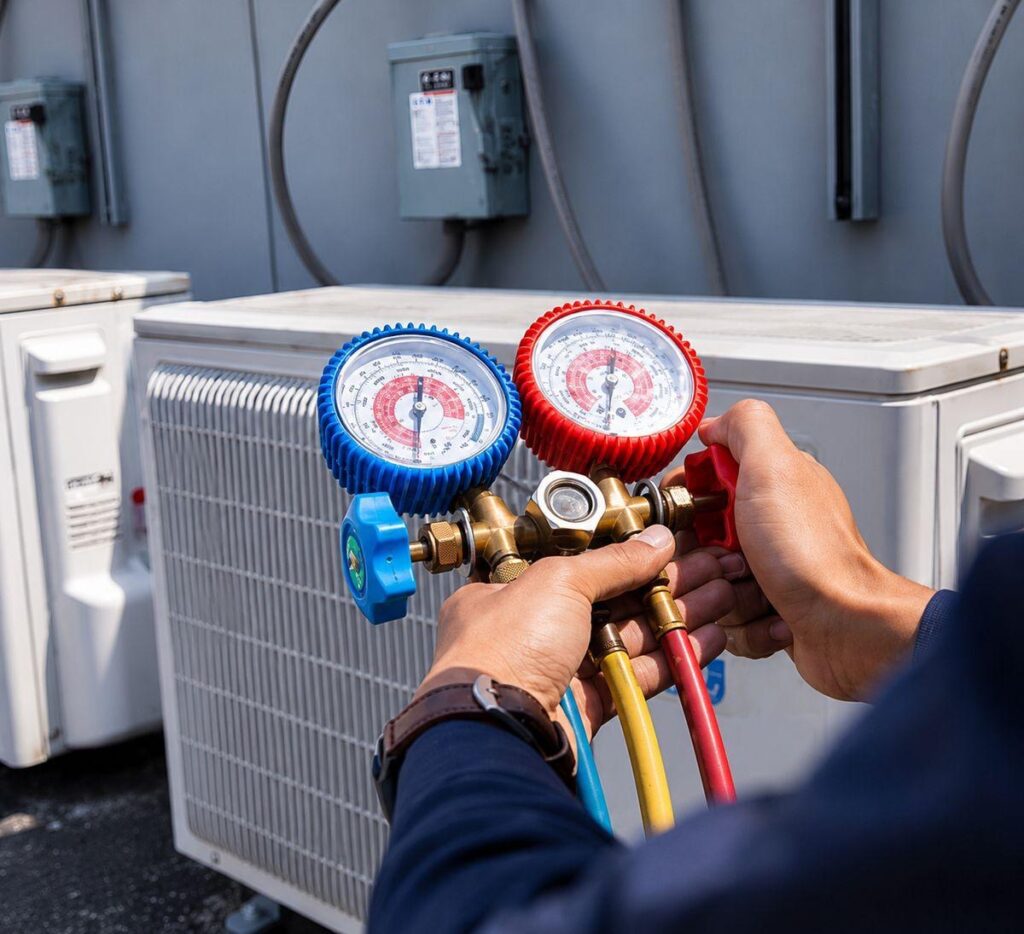
Diagnostic instruments used during HVAC service and commissioning. | Image source: Cool Fox Heating & Air website
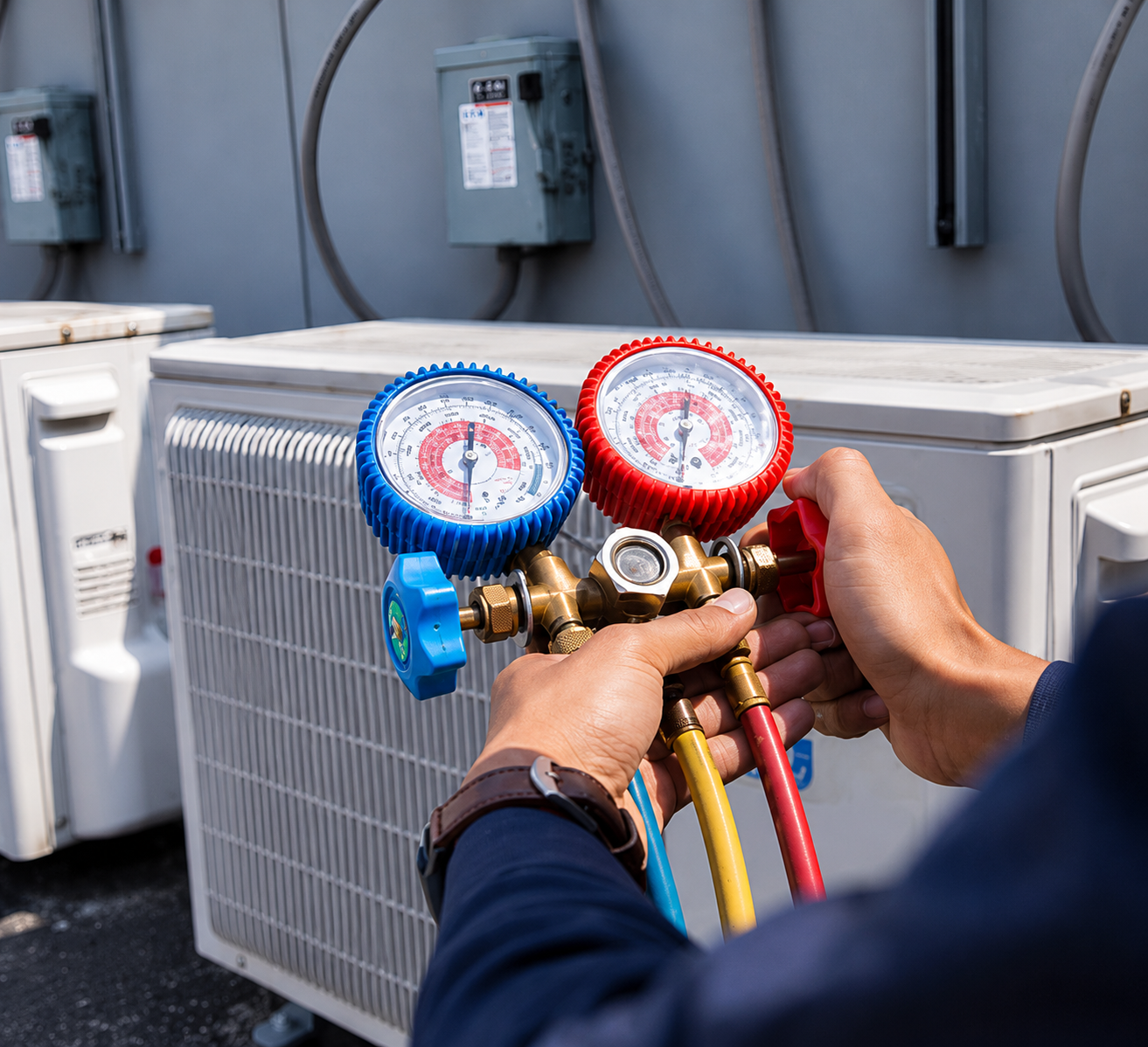
Airflow, Heat Transfer, and Controls Drive Real Efficiency
HVAC efficiency depends on moving the intended amount of air across clean heat-transfer surfaces while the controls stage equipment correctly. A dirty coil, weak blower, restrictive filter, blocked return, or incorrect setting can increase runtime and reduce comfort. Maintenance seeks to restore or preserve those conditions, but it cannot compensate for an undersized return or poorly insulated home without additional work.
Homeowner operation matters as well. Large temperature setbacks, closed registers, continuous fan settings, humidity controls, and thermostat schedules can affect energy use. The technician should explain settings that fit the system rather than applying generic advice. Heat pumps, furnaces, and multi-stage equipment may respond differently.
Efficiency should be discussed as part of a complete operating system. Oversized equipment, restricted ducts, poor refrigerant setup, incorrect airflow, dirty filters, or controls that are not configured correctly can prevent high-efficiency equipment from delivering its rated potential. A balanced recommendation considers purchase price, expected use, comfort priorities, maintenance requirements, warranty terms, and the likely condition of the rest of the home.
What Preventive Maintenance Can and Cannot Do
Maintenance can identify developing problems, keep drains clear, support airflow, preserve service records, and reduce avoidable strain. It cannot guarantee that an electronic board, motor, compressor, or other component will never fail. A credible company avoids implying that a tune-up is an insurance policy against every breakdown.
Homeowners should compare maintenance plans by scope, documentation, scheduling benefits, filter or cleaning charges, repair discounts, and cancellation terms. A very low promotional price may be legitimate, but it should not be used as a pretext for high-pressure replacement recommendations. Ask what is included before the appointment.
The lowest initial price is not always the lowest long-term cost. A more complete comparison includes energy use, maintenance access, repair risk, warranty coverage, expected service life, comfort consistency, noise, and the possibility of future electrical or ductwork work. Homeowners should ask what is included in commissioning and how the contractor will document that the system is operating as designed.
HVAC Maintenance Mistakes to Avoid
Preventive service is less effective when these common errors occur:
- Scheduling only after the system has already failed during extreme weather.
- Changing to a dense filter without checking airflow and filter-area limitations.
- Closing many registers or blocking returns to redirect air.
- Ignoring water, persistent ice, electrical odor, breaker trips, or severe noise between tune-ups.
- Accepting vague repair recommendations that are not tied to measurements or observed condition.
- Assuming maintenance will solve load, duct, insulation, or equipment-sizing problems that require separate design work.
How to Prepare for HVAC Maintenance in Federal Way
The following steps make the appointment more productive:
- Clear access to the thermostat, filter, indoor equipment, electrical panel, and outdoor unit.
- Write down symptoms, affected rooms, time of day, weather conditions, and any thermostat messages.
- Provide prior invoices, warranty information, and a recent utility comparison when relevant.
- Ask what is included in the tune-up and what services would be additional.
- Request a concise summary of findings, measured concerns, completed maintenance, and recommended timing.
- Confirm the correct filter size, type, and check interval for the system.
What You Should Receive at the End of the Visit
The system should be returned to its normal settings, panels secured, shutoffs restored, and the work area cleaned. The technician should explain any immediate safety or reliability issue, separate required repairs from optional improvements, and state whether further diagnosis is needed under different operating conditions.
Documentation can be simple but should be useful. It may include equipment identifiers, checklist items, measurements, photographs, repair estimates, and maintenance timing. The homeowner should understand what normal operation looks like and which symptoms justify a call before the next scheduled visit.
Cool Fox describes its process as straightforward: schedule a consultation, review clear options, and complete the work with clean professional installation. Homeowners can request a free estimate to discuss the home, current equipment, comfort concerns, and project goals before deciding whether HVAC maintenance Federal Way is the right next step.
Frequently Asked Questions
How often should HVAC maintenance be scheduled in Federal Way?
Many systems are professionally serviced at least annually, while heat pumps used for both heating and cooling or high-use systems may benefit from seasonal attention. Follow manufacturer guidance and adjust for debris, pets, filters, and runtime.
Does a tune-up include refrigerant?
Refrigerant should not be added automatically. The technician may evaluate refrigerant-system performance when conditions allow. If charge is low, the cause and repair approach should be discussed.
Will HVAC maintenance lower my energy bill?
It may help when dirt, airflow restriction, controls, or mechanical condition are reducing performance. Savings vary and maintenance cannot overcome major home-envelope or design problems by itself.
Should I replace my filter before the technician arrives?
You can leave the current filter in place if you want the technician to see its condition, and have a replacement available. Ask what filter is appropriate before changing to a different type.
When does a maintenance visit become a repair visit?
If the system has an active failure, repeated fault, leak, safety concern, or complex intermittent problem, diagnostic work may be needed beyond routine maintenance. The company should explain the difference and cost.
Talk With a Local HVAC and Electrical Team
Professional maintenance should leave you with a clearer understanding of your system, not a generic checklist and unanswered questions. Cool Fox Heating & Air can inspect furnaces, heat pumps, air conditioners, airflow, controls, drains, and electrical condition for Federal Way homeowners. Explore maintenance and tune-up services or schedule an appointment.
External Sources
- ENERGY STAR – Heating and Cooling Maintenance Checklist
- ENERGY STAR – Heat and Cool Efficiently
- U.S. Department of Energy – Energy Saver Guide to Home Heating and Cooling
Editorial note: External sources are provided for reader education. Availability of incentives, permits, equipment, and utility programs can change; verify current requirements before publication.