

A heat pump may run in every season, which means it has fewer natural rest periods than a heating-only system. In Kirkland, the transition into months of cool temperatures, rain, windblown debris, and frequent heating cycles is a good time to verify that the system is clean, draining properly, and responding correctly. This heat pump maintenance Kirkland checklist separates safe homeowner tasks from the measurements and adjustments that belong in a professional tune-up. Cool Fox Heating & Air provides HVAC maintenance and tune-up services for existing equipment and heat pump installation when an aging system is no longer dependable.
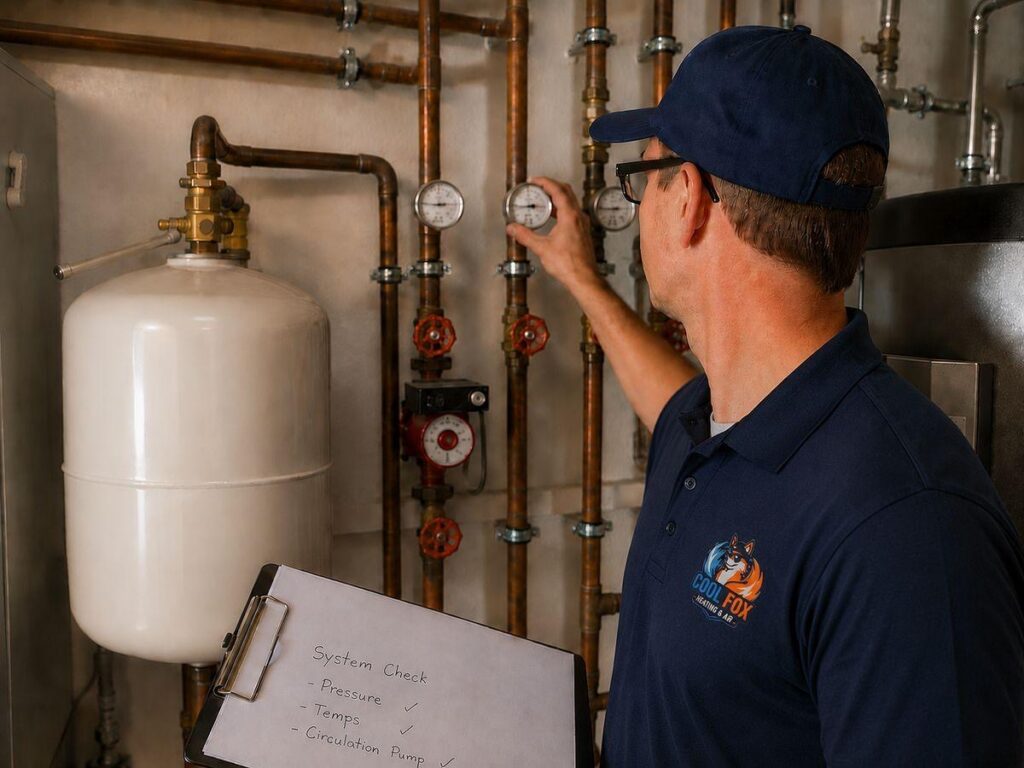
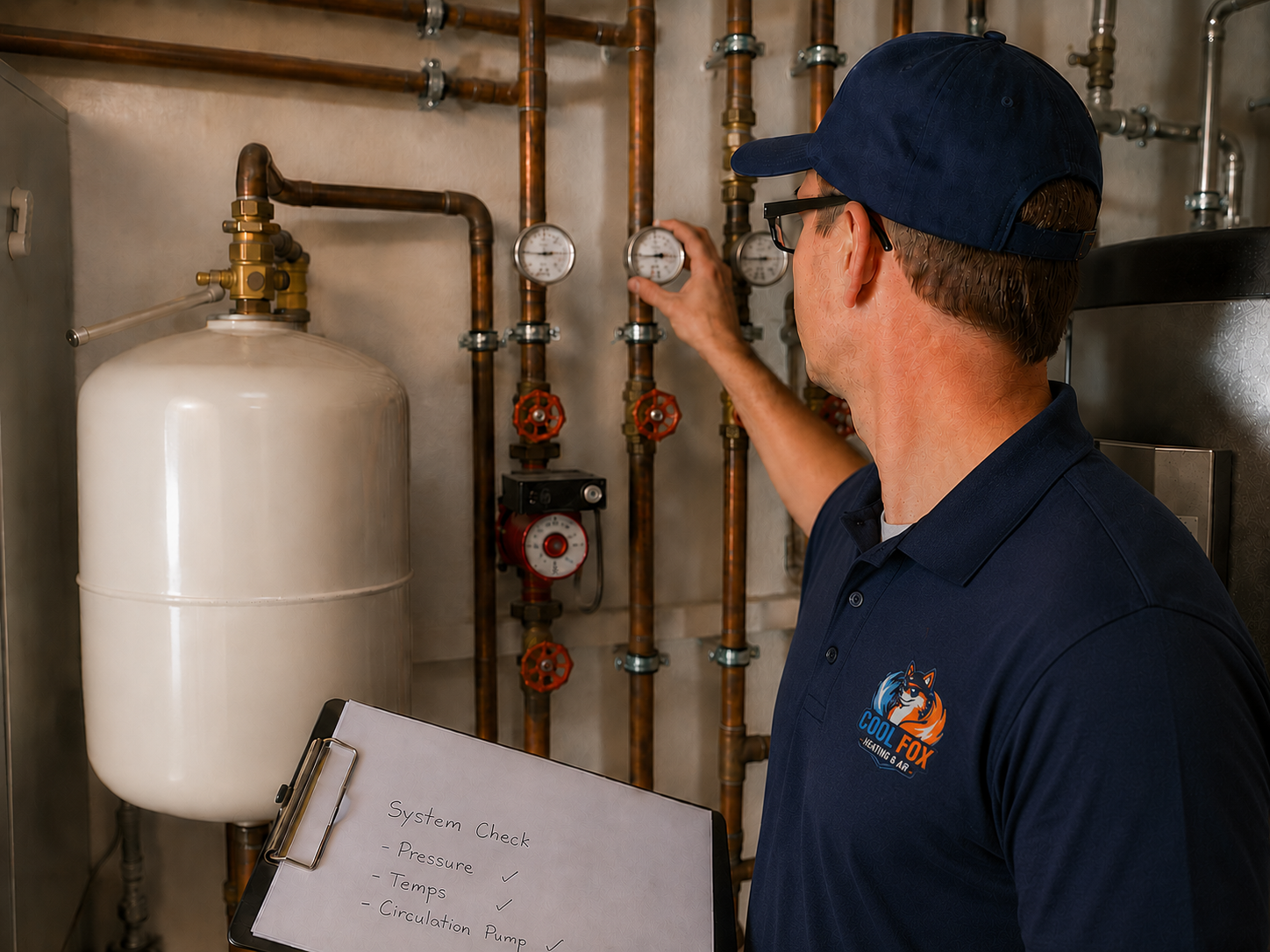
Cool Fox technician performing residential HVAC maintenance. | Image source: Cool Fox Heating & Air website
Heat Pump Maintenance Kirkland: Why Pre-Winter Timing Matters
A small summer problem can become a winter comfort complaint when the heat pump begins operating for longer periods. Restricted filters, leaf buildup, partially blocked drains, weak electrical connections, or control issues may not be obvious during mild weather. A pre-winter visit gives the technician an opportunity to identify abnormal operation before the home depends on the system every day.
Maintenance is also a chance to discuss changes in the home. A remodeled room, new thermostat schedule, added occupants, closed registers, pets, or wildfire-smoke filter use can change airflow and filter loading. The tune-up should not be treated as a ceremonial checklist; it should connect equipment condition with the homeowner’s actual comfort and energy concerns.
A useful starting point is a whole-home conversation rather than a product-only quote. Cool Fox Heating & Air provides HVAC maintenance and tune-up services and can also coordinate heat pump installation services when the project requires both trades. That integrated approach matters because comfort, airflow, controls, electrical capacity, and installation quality all influence the final result.
How a Heat Pump Changes Modes During Cold Weather
In heating mode, the outdoor coil absorbs heat and can become cold enough for moisture to freeze on it. The system periodically enters a defrost cycle to melt normal frost. During defrost, operation and sound may temporarily change, and supplemental heat may operate depending on the system design. Maintenance helps verify that sensors, controls, coil condition, and drainage support that process.
A heat pump also relies on proper indoor airflow. The blower must move the intended amount of air across the indoor coil and through the ducts or indoor heads. A dirty filter, obstructed return, weak motor, dirty wheel, or poorly configured controls can reduce performance and create longer runtimes even when the outdoor equipment is functioning.
For homeowners researching heat pump maintenance Kirkland, the practical lesson is that equipment specifications are only one part of the decision. The selected system must be compatible with the home, installed to manufacturer requirements, commissioned under real operating conditions, and explained clearly enough that the homeowner knows how to use it efficiently.
Homeowner Pre-Winter Checklist: Safe Tasks You Can Do
Homeowners can complete several useful visual and housekeeping steps without opening equipment or touching refrigerant components:
- Check the filter and replace or clean it according to the equipment and filter manufacturer’s directions.
- Keep furniture, rugs, storage, and curtains from blocking return grilles, supply registers, or ductless indoor units.
- Remove leaves, weeds, and loose debris around the outdoor unit while maintaining the clearances in the installation instructions.
- Look for damaged insulation on visible refrigerant lines, loose panels, unusual staining, or water where it does not belong.
- Test the thermostat in heating mode before the coldest weather and confirm that programmed schedules still match household routines.
- Note new sounds, odors, frequent cycling, breaker trips, ice that does not clear, or rooms that are becoming harder to heat.
What a Professional Heat Pump Tune-Up Should Evaluate
A professional visit should include more than spraying the outdoor coil. The technician may inspect electrical connections and components, measure operating temperatures and pressures as appropriate, verify airflow, examine coils and blower components, test controls and safeties, check drain paths, assess the outdoor fan and compressor, and confirm that the system enters and leaves heating modes normally.
The exact checklist depends on whether the system is ducted, ductless, single-zone, multi-zone, or paired with a furnace or electric air handler. The technician should document unusual readings and explain which items require correction now, which should be watched, and which are normal for the system. Refrigerant should not be added automatically without investigating why the charge appears incorrect.
A professional evaluation should leave the homeowner with clear choices rather than a vague recommendation. Each option should identify what is being replaced or retained, what supporting work is included, how comfort or reliability is expected to improve, and what assumptions could change the scope. Written clarity is especially important when multiple pieces of equipment, electrical changes, duct modifications, condensate routing, controls, or permits may be involved.
Kirkland Rain, Vegetation, and Outdoor-Unit Placement
Kirkland properties often have mature landscaping, evergreen needles, moss, and seasonal leaf debris. The outdoor unit needs free airflow and service access, so shrubs should not be allowed to grow tightly around the cabinet. Debris can collect under and behind the unit even when the visible face appears clean.
Water management is equally important. Roof runoff should not pour directly onto the equipment, and defrost water needs a place to drain without creating an icy walkway or saturating a vulnerable part of the structure. The unit should remain level and supported. A cover that traps moisture or blocks airflow should not be added unless it is specifically approved for the equipment and season.
Homeowners near wooded or high-debris areas may need more frequent visual checks than the calendar alone suggests. After wind events, look for branches, blown material, or fencing that has shifted into the required clearance. These observations do not replace professional service, but they can prevent a simple obstruction from becoming a no-heat call.
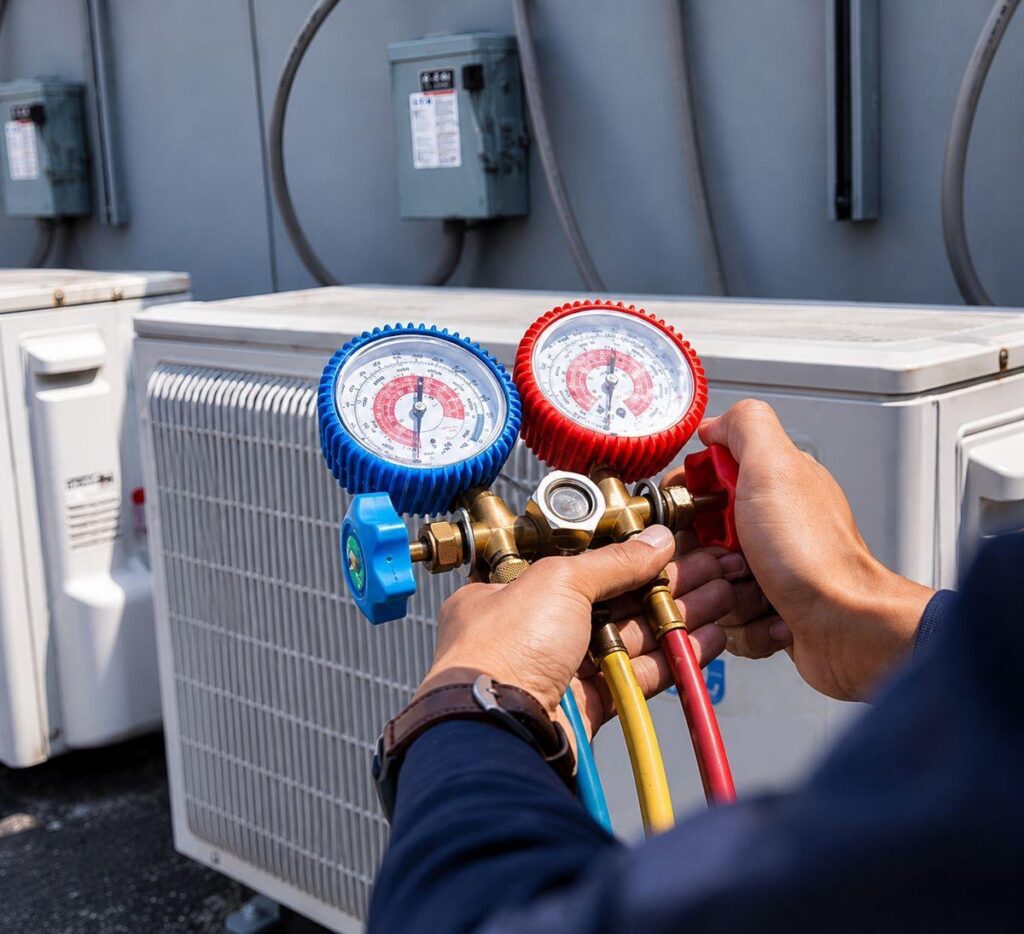
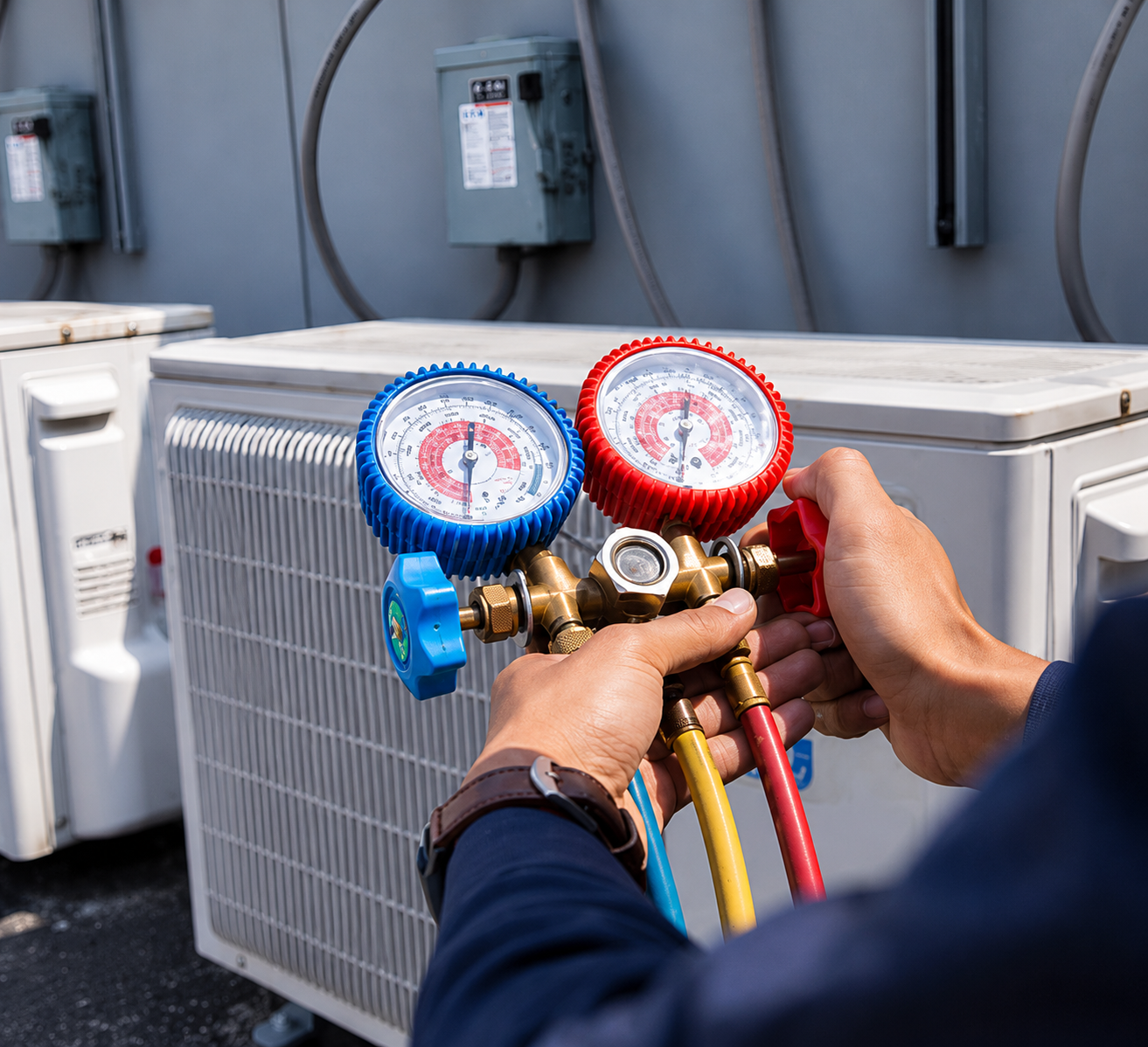
Professional diagnostic tools used during heat pump maintenance and commissioning. | Image source: Cool Fox Heating & Air website
Maintenance Protects Efficiency by Preserving Heat Transfer and Airflow
Heat pumps work by moving heat across indoor and outdoor coils. Dirt, debris, low airflow, incorrect controls, and mechanical wear make that transfer more difficult. The result may be longer operation, higher use of backup heat, reduced comfort, or increased stress on components. Maintenance cannot change the home’s insulation or weather, but it can help the equipment operate closer to its intended condition.
Filter strategy matters. A filter must protect equipment and indoor air without creating excessive resistance. Installing the highest-rated filter that fits is not always the right choice if the return system cannot support it. Ask the technician what filter size and type are appropriate, how often it should be checked, and whether measurements indicate an airflow restriction.
Efficiency should be discussed as part of a complete operating system. Oversized equipment, restricted ducts, poor refrigerant setup, incorrect airflow, dirty filters, or controls that are not configured correctly can prevent high-efficiency equipment from delivering its rated potential. A balanced recommendation considers purchase price, expected use, comfort priorities, maintenance requirements, warranty terms, and the likely condition of the rest of the home.
The Financial Value of Preventive Service
A tune-up is not a guarantee that no component will fail, but it can identify wear, contamination, drainage problems, control errors, and electrical issues before they cause secondary damage or an emergency visit. It also creates a service record that may be useful for warranty administration and helps homeowners budget for equipment approaching the end of its useful life.
The best maintenance plan is understandable. Homeowners should know what is included, whether filters or parts are extra, how findings are documented, and whether priority scheduling or discounts apply. Be cautious of a low-price visit that exists primarily to create sales pressure without meaningful inspection or measurements.
The lowest initial price is not always the lowest long-term cost. A more complete comparison includes energy use, maintenance access, repair risk, warranty coverage, expected service life, comfort consistency, noise, and the possibility of future electrical or ductwork work. Homeowners should ask what is included in commissioning and how the contractor will document that the system is operating as designed.
Pre-Winter Maintenance Mistakes to Avoid
Good intentions can still lead to equipment problems. Avoid these common mistakes:
- Covering the outdoor unit in a way that blocks airflow or traps moisture during the heating season.
- Chipping ice from the coil with tools or pouring very hot water onto frozen equipment.
- Opening electrical compartments, bypassing safety switches, or repeatedly resetting a breaker without diagnosis.
- Adding dense filters without confirming that the system can maintain appropriate airflow.
- Closing many registers to force heat into other rooms, which can increase duct pressure and reduce total airflow.
- Ignoring persistent frost, unusual noise, burning odor, water leakage, or backup heat that seems to run constantly.
How to Prepare for a Professional Tune-Up
A few minutes of preparation helps the technician focus on diagnosis and system performance:
- Make the thermostat, indoor unit, electrical panel, filter location, and outdoor unit accessible.
- Write down comfort complaints by room and note when they occur.
- Gather prior service reports, warranty information, and recent utility bills when relevant.
- Explain any thermostat changes, renovations, new filters, or electrical events since the last visit.
- Ask for a summary of measured conditions, recommended repairs, and future maintenance timing.
- Confirm which homeowner tasks are appropriate between visits and which symptoms require a service call.
What to Expect After Heat Pump Maintenance
After the visit, the homeowner should understand the condition of the system. The technician should explain any observed wear, whether operation is within expected ranges, and what repair or monitoring steps are recommended. Statements such as ‘it looks fine’ are less useful than a concise record of what was inspected and why a recommendation is being made.
The thermostat and equipment should be returned to normal operation, panels secured, work areas cleaned, and any shutoffs restored. If a problem cannot be fully evaluated because outdoor conditions are too mild for a particular test, the technician should say so and recommend an appropriate follow-up rather than pretending the result is conclusive.
Cool Fox describes its process as straightforward: schedule a consultation, review clear options, and complete the work with clean professional installation. Homeowners can request a free estimate to discuss the home, current equipment, comfort concerns, and project goals before deciding whether heat pump maintenance Kirkland is the right next step.
Frequently Asked Questions
How often should I schedule heat pump maintenance in Kirkland?
Many homeowners schedule professional service at least annually, and systems used heavily for both heating and cooling may benefit from seasonal checks. Follow the equipment manufacturer’s guidance and adjust for pets, debris, smoke, and operating hours.
Is frost on my outdoor heat pump normal?
A light frost can be normal in cool, damp weather, and the system should periodically defrost. Thick ice that persists, blocks the coil, or returns quickly after defrost deserves professional diagnosis.
Can I clean the outdoor coil myself?
You can remove loose debris from around the cabinet without opening it. Coil cleaning methods vary, and fins and electrical parts are easy to damage. Professional cleaning is safer when buildup is significant.
Why does backup heat increase my electric bill?
Electric auxiliary heat may use more electricity than normal heat-pump operation. It can run during defrost, very cold conditions, large thermostat setbacks, or a system fault. Persistent use should be evaluated.
What are urgent heat pump warning signs?
Call for service when the system trips breakers, produces a burning odor, leaks water near electrical components, makes severe mechanical noise, remains heavily iced, or cannot maintain a safe indoor temperature.
Talk With a Local HVAC and Electrical Team
Pre-winter maintenance is most useful when it is scheduled before the first sustained cold spell. Cool Fox Heating & Air can inspect heat-pump operation, airflow, controls, drainage, and electrical condition for Kirkland homeowners. Review maintenance and tune-up services or request service before the system enters its busiest season.
External Sources
- ENERGY STAR – Heating and Cooling Maintenance Checklist
- U.S. Department of Energy – Energy Saver Guide to Home Heating and Cooling
- U.S. Department of Energy – Heat Pumps
Editorial note: External sources are provided for reader education. Availability of incentives, permits, equipment, and utility programs can change; verify current requirements before publication.