

A furnace breakdown creates urgency, but urgency should not eliminate analysis. Some failures are straightforward and worth repairing. Others occur after years of declining reliability, uneven heat, rising costs, or safety concerns. This furnace repair or replacement Renton guide uses five practical factors to help homeowners separate a reasonable repair from a replacement that may offer better long-term value. Cool Fox Heating & Air provides furnace repair and installation as well as complete HVAC system replacement, so the recommendation can consider both immediate restoration and future comfort goals.
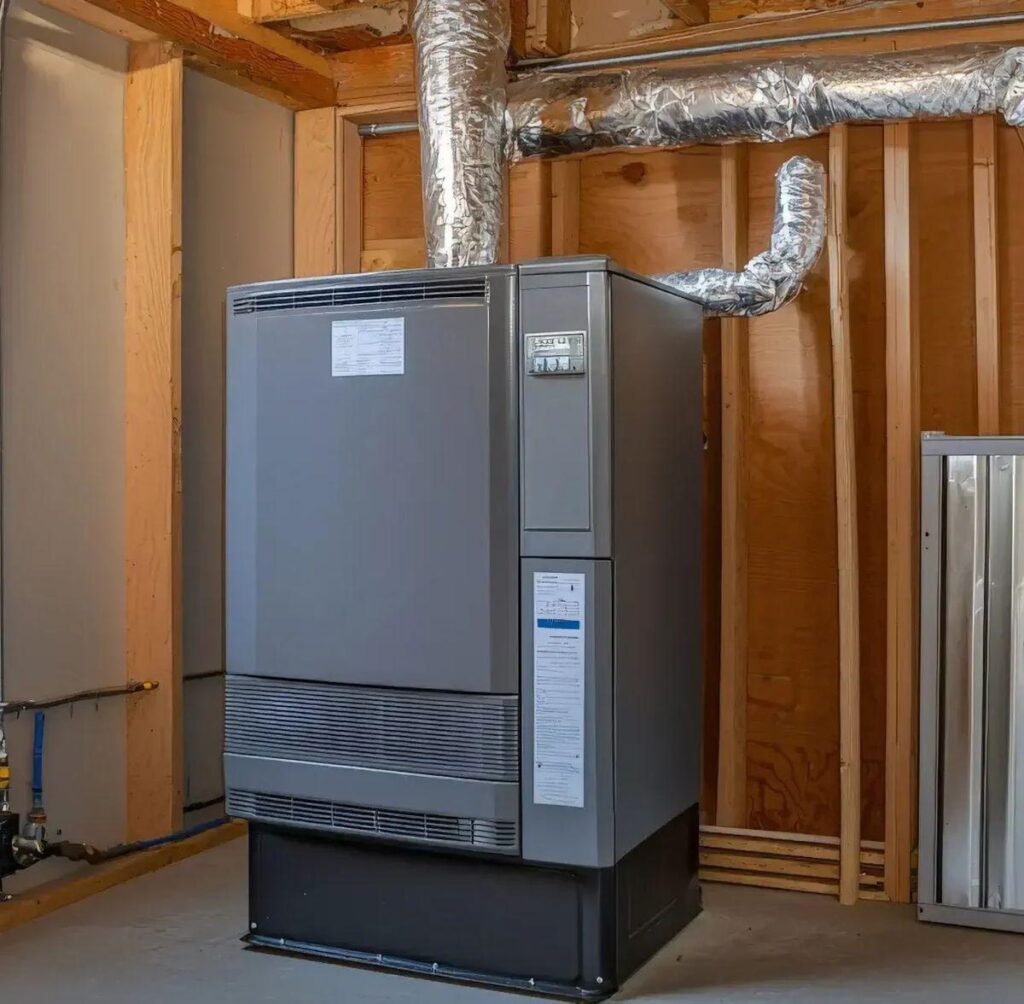
Professional furnace installation and duct connection work. | Image source: Cool Fox Heating & Air website
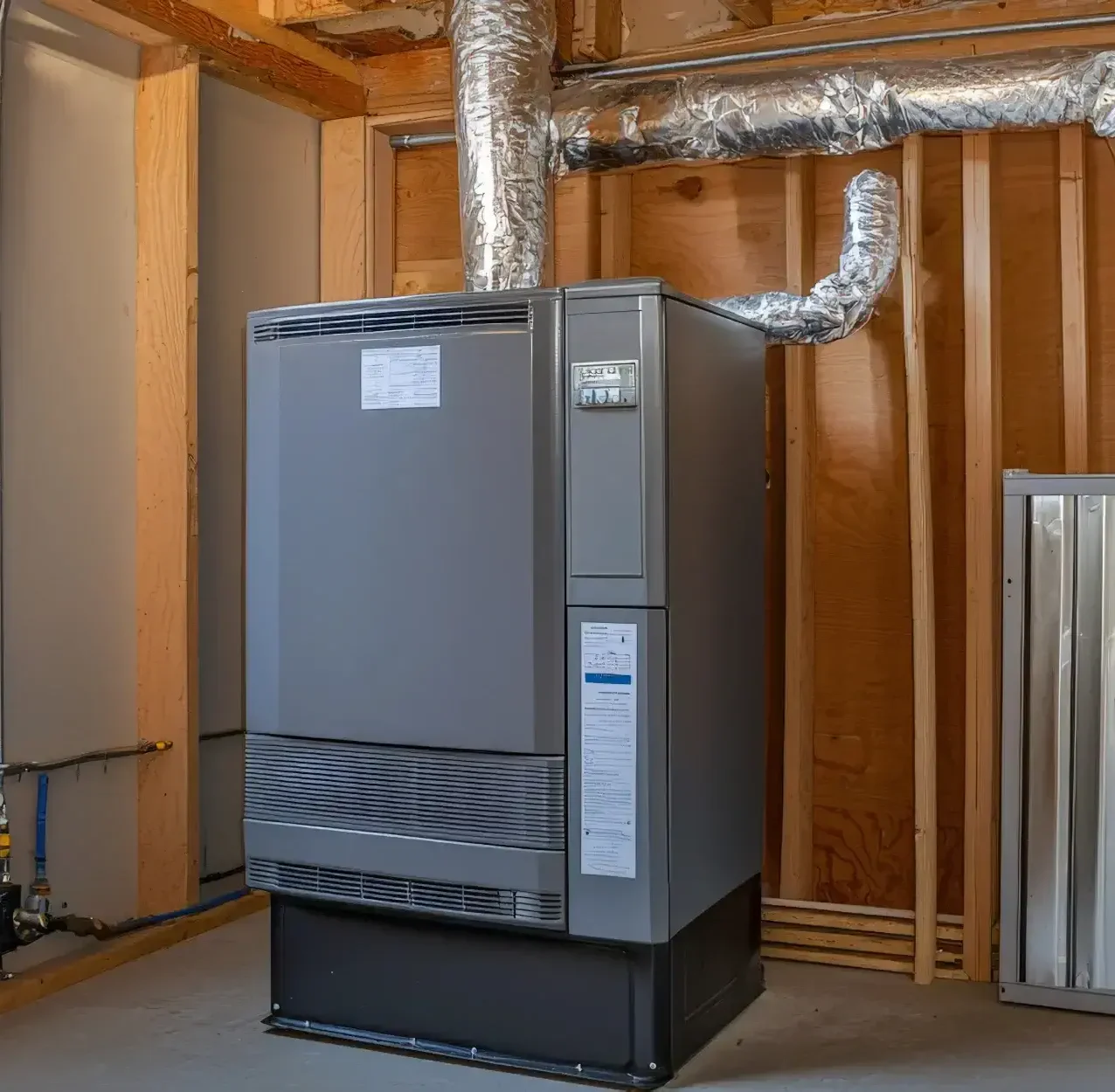
Furnace Repair or Replacement Renton: Begin With Safety
The first factor is whether the furnace can operate safely. Combustion, venting, heat-exchanger condition, gas connections, ignition, electrical components, and carbon-monoxide protection deserve careful attention. A nuisance shutdown and a verified safety defect are not the same. The technician should explain the observed condition, testing performed, and whether the system must remain off.
Homeowners should never bypass a safety switch, tape a panel interlock, repeatedly reset a tripping breaker, or continue operating equipment that produces a gas odor, combustion concern, scorching, or persistent carbon-monoxide alarm. Emergency instructions should come from the appropriate utility or emergency service when gas or carbon monoxide is suspected.
A useful starting point is a whole-home conversation rather than a product-only quote. Cool Fox Heating & Air provides furnace repair and installation and can also coordinate HVAC system replacement when the project requires both trades. That integrated approach matters because comfort, airflow, controls, electrical capacity, and installation quality all influence the final result.
Factor Two: Compare the Repair With the Furnace’s Overall Condition
Repair price only makes sense in context. A moderate repair on a well-maintained furnace with a sound heat exchanger, available parts, and no pattern of failures can be reasonable. The same repair on an old, noisy furnace with several worn components and no warranty may simply postpone another decision.
Ask what failed, why it failed, and whether the proposed repair addresses the cause. A replacement control board caused by water leakage, voltage problems, or overheated airflow may fail again if the underlying condition is ignored. The technician should inspect related systems rather than treating every failed part as an isolated event.
For homeowners researching furnace repair or replacement Renton, the practical lesson is that equipment specifications are only one part of the decision. The selected system must be compatible with the home, installed to manufacturer requirements, commissioned under real operating conditions, and explained clearly enough that the homeowner knows how to use it efficiently.
Factors Three Through Five: Reliability, Comfort, and Future Plans
The remaining factors connect today’s repair to the way the home needs to function over the next several years:
- Reliability history: frequency of no-heat calls, recurring ignition or blower faults, and whether repairs are becoming more expensive.
- Comfort and airflow: cold rooms, excessive noise, short cycling, weak returns, temperature swings, or inability to maintain normal settings.
- Energy and operation: unexplained increases in use, long runtimes, frequent cycling, or a blower and duct system that cannot support current needs.
- Future cooling: plans to add central air may affect whether the old furnace blower and cabinet should remain.
- Electrification goals: a heat-pump conversion or dual-fuel design may provide heating and cooling while changing the role of the furnace.
- Ownership timeline: a short-term repair can be rational for one homeowner, while another may prioritize a long-term system redesign.
What a Professional Furnace Diagnosis Should Include
The service visit should confirm the complaint, inspect the furnace, review fault history where available, test relevant electrical and safety components, evaluate combustion and venting as appropriate, and examine airflow factors. The homeowner should receive a clear explanation of confirmed findings, not a list of every part that could theoretically fail.
When replacement is proposed, the contractor should also assess heating load, ducts, returns, filters, thermostat location, gas and venting, electrical capacity, condensate, and cooling plans. A furnace is one component in an air-distribution system. Replacing it without addressing a restrictive return or undersized filter can preserve noise and comfort problems.
A professional evaluation should leave the homeowner with clear choices rather than a vague recommendation. Each option should identify what is being replaced or retained, what supporting work is included, how comfort or reliability is expected to improve, and what assumptions could change the scope. Written clarity is especially important when multiple pieces of equipment, electrical changes, duct modifications, condensate routing, controls, or permits may be involved.
Renton Homes Can Have Mixed Systems and Remodeling History
Renton includes homes built across many eras, and mechanical rooms often show layers of prior work. Finished basements, additions, converted garages, and changed floor plans may have been connected to the original ducts without a full redesign. The replacement assessment should identify whether every occupied area receives and returns enough air.
Moisture and drainage should also be reviewed, particularly for high-efficiency condensing furnaces. Condensate must drain correctly and components need service access. Vent terminations should be located and maintained according to equipment and code requirements, not blocked by storage, vegetation, or later construction.
Homeowners considering a heat pump can ask whether the furnace should be replaced, retained for dual fuel, or removed in favor of an air handler. Cool Fox’s heat pump installation services and in-house electrical capability make it possible to discuss the complete path rather than treating the furnace decision in isolation.
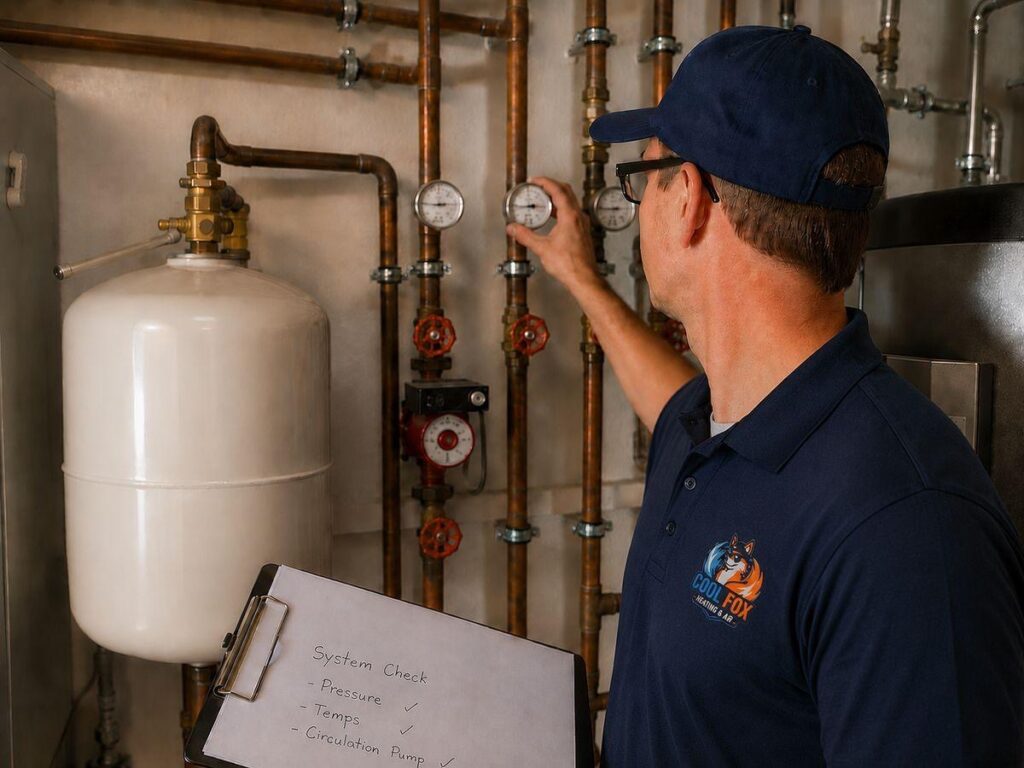
Cool Fox technician inspecting residential heating equipment. | Image source: Cool Fox Heating & Air website
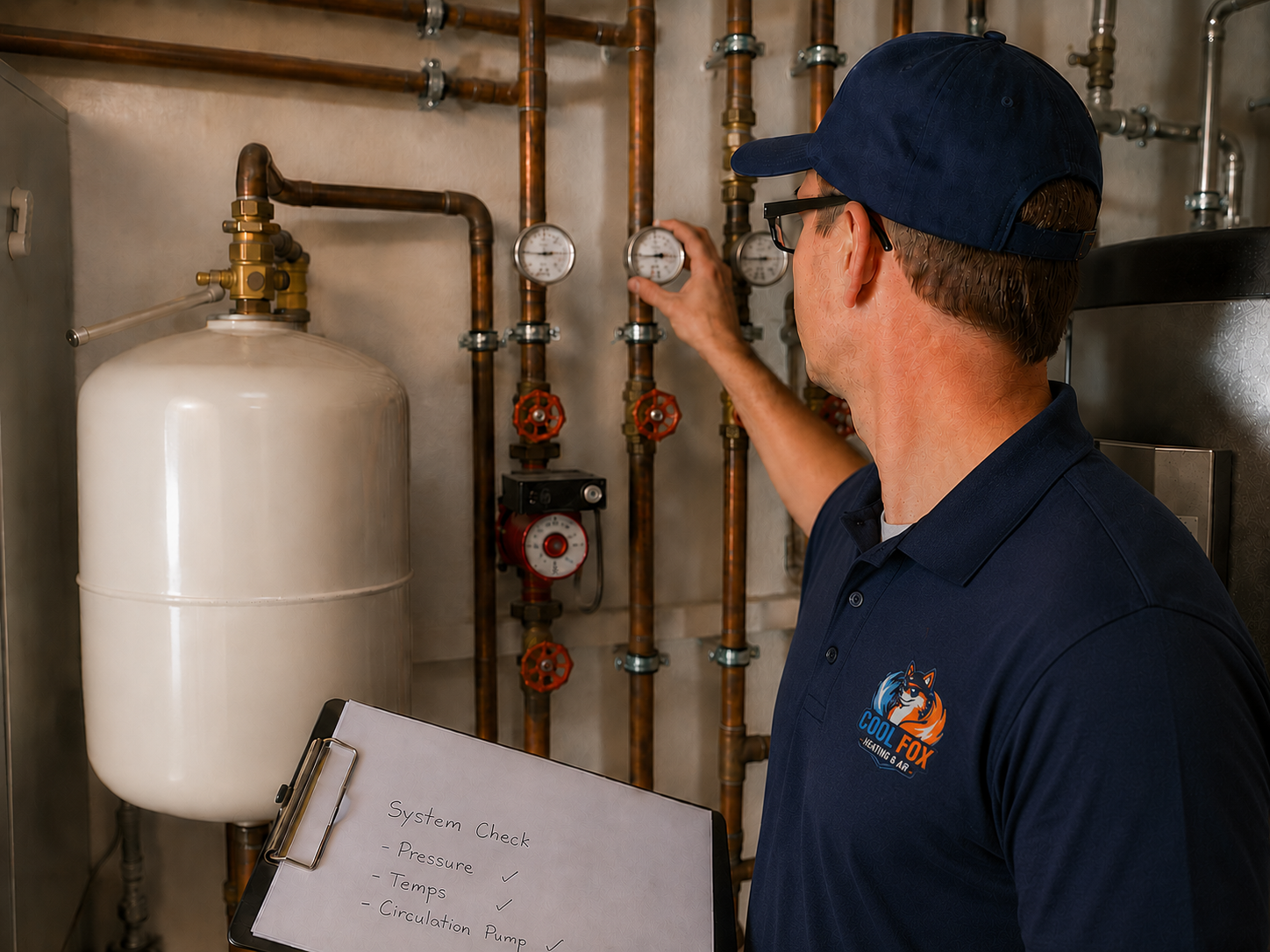
Efficiency Improvements Are Most Valuable When the System Is Designed Well
A newer furnace may use fuel more efficiently and provide improved blower control, but equipment ratings do not correct duct leakage, poor return air, incorrect sizing, or a thermostat located in an unrepresentative area. A load calculation helps prevent oversizing, which can create short cycles and uneven temperatures.
If cooling is being added, blower performance and indoor-coil selection become part of the efficiency discussion. Variable-speed equipment can improve comfort and filtration, but it must be configured correctly. Homeowners should ask how the proposal changes expected operation rather than assuming that the highest feature level automatically produces the best value.
Efficiency should be discussed as part of a complete operating system. Oversized equipment, restricted ducts, poor refrigerant setup, incorrect airflow, dirty filters, or controls that are not configured correctly can prevent high-efficiency equipment from delivering its rated potential. A balanced recommendation considers purchase price, expected use, comfort priorities, maintenance requirements, warranty terms, and the likely condition of the rest of the home.
Build a Simple Repair-versus-Replacement Financial Comparison
List the repair price, warranty on the repair, other known issues, expected remaining life, recent repair spending, and likelihood of another major component failure. Then compare the complete replacement price, warranty, included scope, expected comfort changes, and whether it avoids a near-term air-conditioning or electrical project. This is more informative than a fixed percentage rule.
A low-cost repair may be the best choice when it safely restores a sound system. Replacement may be more attractive when a major repair is paired with old equipment, repeated failures, unavailable parts, comfort problems, or a planned heat-pump conversion. Financing should be evaluated carefully, including total repayment and current terms.
The lowest initial price is not always the lowest long-term cost. A more complete comparison includes energy use, maintenance access, repair risk, warranty coverage, expected service life, comfort consistency, noise, and the possibility of future electrical or ductwork work. Homeowners should ask what is included in commissioning and how the contractor will document that the system is operating as designed.
Furnace Decision Mistakes to Avoid
A clear diagnosis and written options help homeowners avoid these errors:
- Replacing the furnace solely because of age without confirming condition and repairability.
- Authorizing repeated repairs without reviewing the cumulative pattern and remaining system risks.
- Accepting a safety claim without an explanation of the observed defect and recommended next step.
- Buying a furnace by input capacity without load calculations and duct assessment.
- Ignoring plans for air conditioning, heat pumps, electrical upgrades, or remodeling.
- Comparing bids that use different equipment, venting, filters, controls, permits, and commissioning scope.
Questions to Ask Before You Decide
Use these questions during the service or estimate visit:
- What exact component failed, and what evidence confirms the diagnosis?
- Is the furnace safe to operate now, and what testing supports that conclusion?
- What is the repair warranty, and what other components show wear or abnormal readings?
- How many repairs has the system had, and are they related to airflow, drainage, voltage, or another root cause?
- What replacement options fit the calculated load and existing ducts?
- How would adding cooling or choosing a heat pump change the recommended scope?
What Good Repair and Replacement Service Should Look Like
For a repair, the technician should protect the work area, install listed compatible parts, correct relevant causes when included, restore panels and safeties, test operation, and explain what was done. The invoice should identify the repaired component and warranty. Homeowners should receive realistic guidance rather than a promise that an aging system will never fail again.
For replacement, the process should include load and duct review, exact equipment selection, permits, removal, installation, venting or refrigerant work, electrical coordination, startup, and homeowner education. The team should leave the mechanical area clean and make filters, controls, and service points accessible.
Cool Fox describes its process as straightforward: schedule a consultation, review clear options, and complete the work with clean professional installation. Homeowners can request a free estimate to discuss the home, current equipment, comfort concerns, and project goals before deciding whether furnace repair or replacement Renton is the right next step.
Frequently Asked Questions
Is it worth repairing a 15-year-old furnace?
It can be when the repair is modest, the furnace is safe and otherwise sound, parts are available, and the home has no major comfort or upgrade goals. Age alone does not decide.
What furnace problems usually support replacement?
A compromised heat exchanger, repeated major failures, obsolete parts, severe corrosion, or a repair combined with poor overall condition can make replacement more practical. Diagnosis must be system-specific.
Can a new furnace improve uneven heating?
It may help if the old furnace is malfunctioning or incorrectly sized, but uneven heating often involves ducts, returns, balancing, insulation, or room loads. Those factors should be assessed.
Should I install a heat pump instead of another furnace?
A heat pump can provide heating and cooling and may fit many Renton homes. Electrical capacity, ducts, load, backup strategy, utility considerations, and comfort preferences should be reviewed.
How quickly should I decide during a no-heat call?
Address safety and protect the home first. When temporary safe heat is available, request written repair and replacement options rather than making a major decision from pressure alone.
Talk With a Local HVAC and Electrical Team
A good furnace recommendation should explain both the immediate problem and the condition of the larger system. Cool Fox Heating & Air can diagnose heating problems and provide repair, furnace replacement, heat-pump, and supporting electrical options for Renton homeowners. Review furnace services or request an estimate.
External Sources
- ENERGY STAR – When Is It Time to Replace?
- ENERGY STAR – Tips for Hiring a Heating and Cooling Contractor
- U.S. Department of Energy – Energy Saver Guide to Home Heating and Cooling
Editorial note: External sources are provided for reader education. Availability of incentives, permits, equipment, and utility programs can change; verify current requirements before publication.